
Summer Hydroponic Tower Garden Guide: How to Grow in Hot Weather
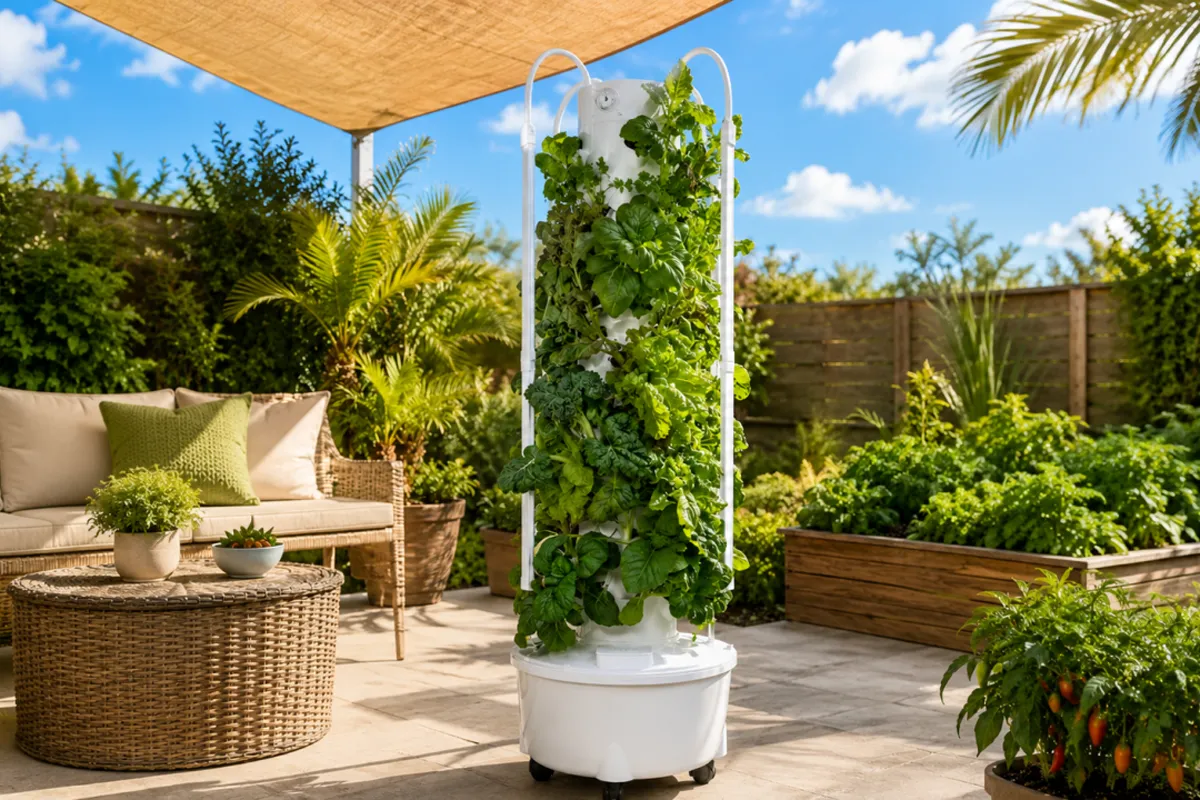
Summer provides long days and abundant sunlight, but extreme heat can make outdoor hydroponic growing more difficult. Unlike plants growing in soil, the roots in a hydroponic tower garden depend entirely on the circulating nutrient solution. When the tower, reservoir, pipes, and water are exposed to intense sunlight for several hours, the root zone may heat up much faster than expected.
High temperatures can lead to wilting, slower growth, leaf damage, nutrient imbalance, early flowering, and poor-quality harvests. Lettuce and other cool-season greens are especially sensitive because several days above approximately 75°F can encourage bolting. The goal of summer hydroponic management is not simply to add more water. Growers must manage the temperature of both the plants and the nutrient solution while maintaining stable water circulation, oxygen, nutrients, and light.
This guide explains how to protect a hydroponic tower during hot summer weather without unnecessarily shutting down the growing system, featuring practical hot-weather care for the Yunzy V8 and other hydroponic tower gardens.
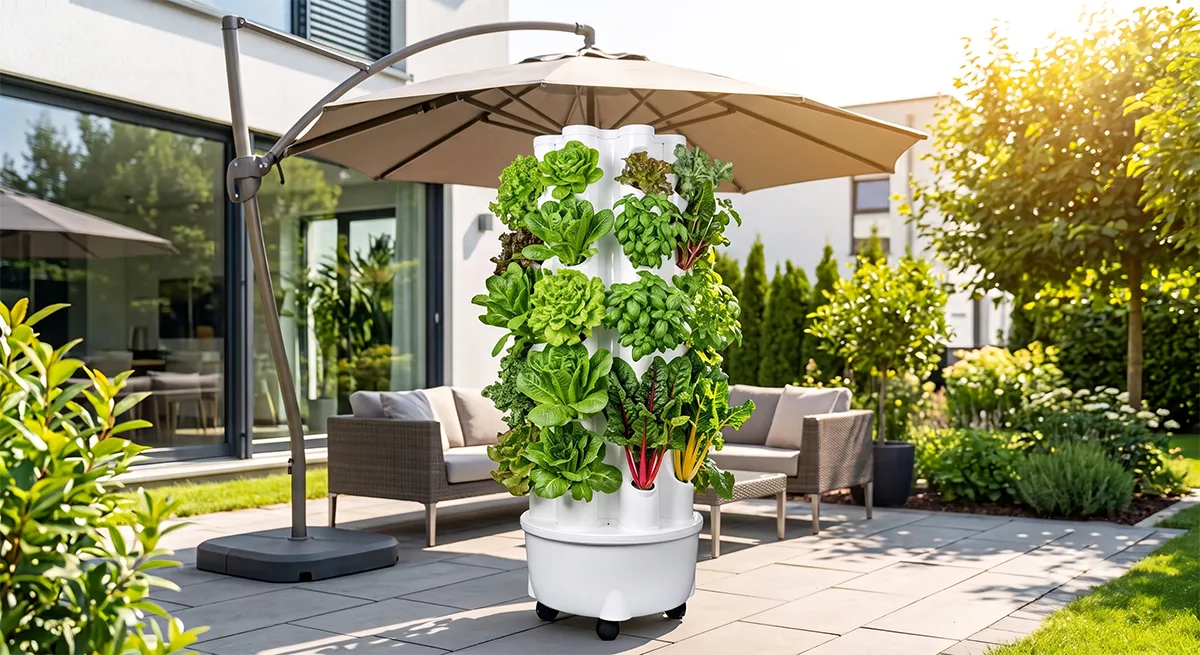
Using the Yunzy V8 in Hot Summer Weather
The Yunzy V8 is a premium 40-site hydroponic tower available with eight 15W full-spectrum LED light bars or in a no-light configuration for natural-light growing. It includes a 12-gallon reservoir, a 20W circulation pump, food-grade PP material with UV protection, and caster wheels for easy repositioning.
These features make the V8 suitable for patios, greenhouses, sunrooms, and indoor growing spaces. However, UV-resistant material and a larger reservoir do not make the system entirely immune to summer heat. The reservoir, water temperature, crop spacing, and pump flow still require active management.
Recognizing Heat Stress Early
Plants often show visible warning signs before the whole crop fails. A plant that wilts temporarily during the hottest part of the day may recover in the evening. However, repeated wilting, damaged roots, or stalled growth should never be ignored.
| Plant or System Condition | Possible Heat-Related Cause |
| Leaves wilt during the afternoon | Water loss is faster than root uptake |
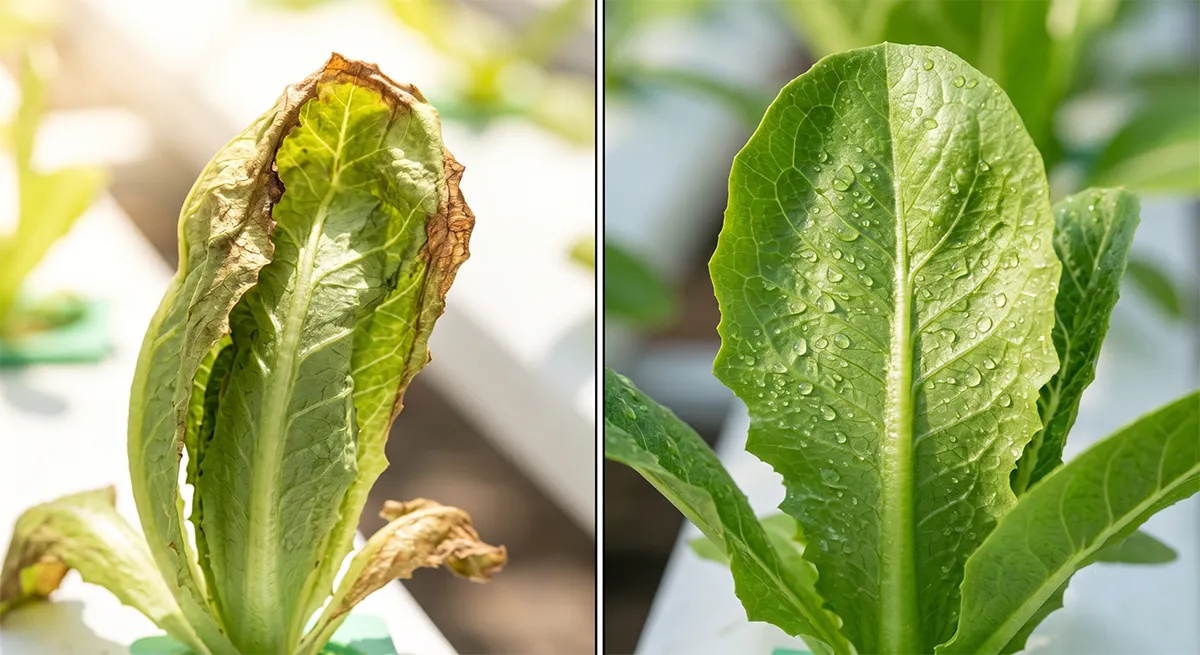
| Leaf edges appear dry or scorched | Intense heat, direct sunlight, or hot wind (Tipburn) |
| Lettuce grows a tall central stem | The plant may be starting to bolt due to sustained heat |
| Lettuce becomes bitter | High temperature or delayed harvesting |
| Growth slows suddenly | Root-zone or ambient air temperature may be too high |
| Roots become discolored (brown/mushy) | Low oxygen levels, high water temperature, or poor sanitation |
| Water level falls unusually quickly | Increased plant transpiration and rapid evaporation |
| Algae appears near openings | Warm water combined with excess light exposure |
| Pump becomes noisier | Low water level, root blockage, or overheating equipment |
11 Essential Summer Hydroponic Care Tips
1. Measure the Water Temperature, Not Only the Air
Many growers check the weather forecast but never measure the temperature inside the tower reservoir. During summer, place a waterproof thermometer in the nutrient solution and record the temperature at three different times:
- Early morning: Shows how much the reservoir cooled overnight.
- Early afternoon: Identifies rising daytime temperature.
- Late afternoon: Usually reveals the highest daily water temperature.
For small hydroponic lettuce systems, a practical monitoring range is approximately 65°F to 80°F, with 72°F to 75°F often cited as a favorable target.
2. Keep the Reservoir Out of Direct Afternoon Sun
The reservoir is the largest body of water in a hydroponic tower and should receive the most protection. On the Yunzy V8, the 12-gallon reservoir offers useful water volume, but it can still absorb substantial heat. Useful cooling methods include:
- Moving the tower: Utilize the V8 caster wheels to move the tower to morning sun and afternoon shade. (Move slowly on level surfaces).
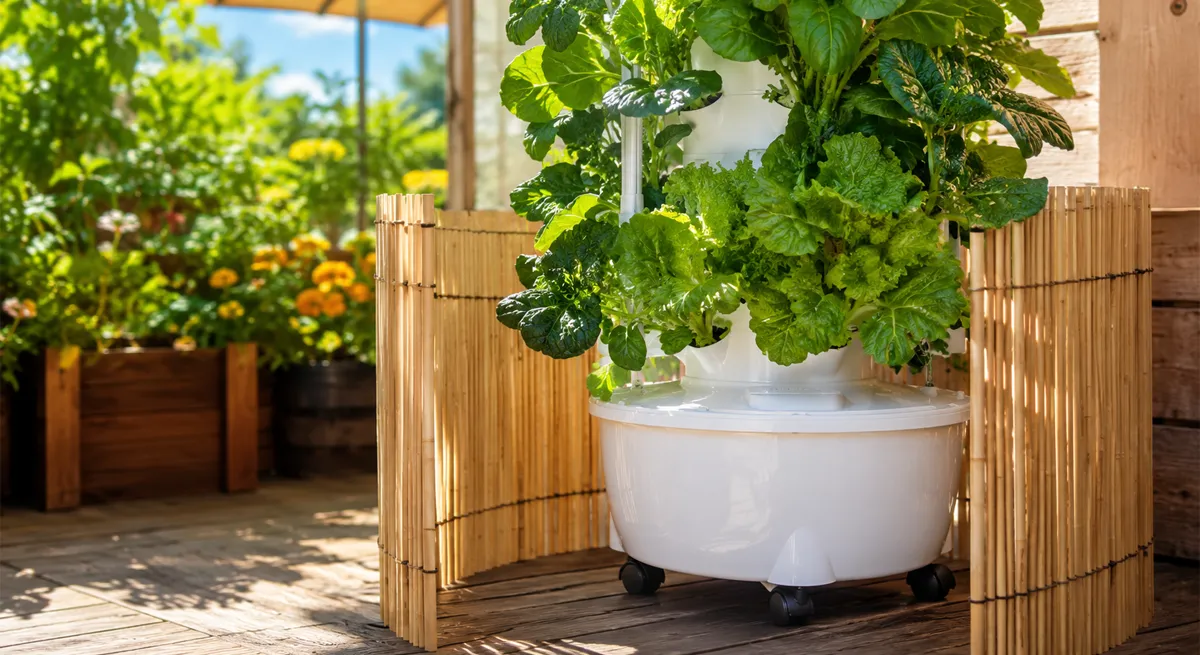
- Reflective covers: Place a light-colored or reflective barrier around the base.
- Insulation: Add insulation around the outside of the tank.
- Keep the lid closed: Prevent hot air and light from entering.
- Elevation: Raise the reservoir slightly above a hot concrete surface when safe to prevent heat transfer from the ground.
3. Use Shade Without Removing Too Much Light
The objective of shade is to reduce peak heat, not to leave the vegetables in darkness all day. For outdoor hydroponic production during hot months, an overhead 30% to 50% shade cloth is a highly effective starting point. Place shade cloth above the tower rather than wrapping it tightly around the plants, which can trap heat and reduce airflow.
4. Maintain Strong and Even Water Circulation
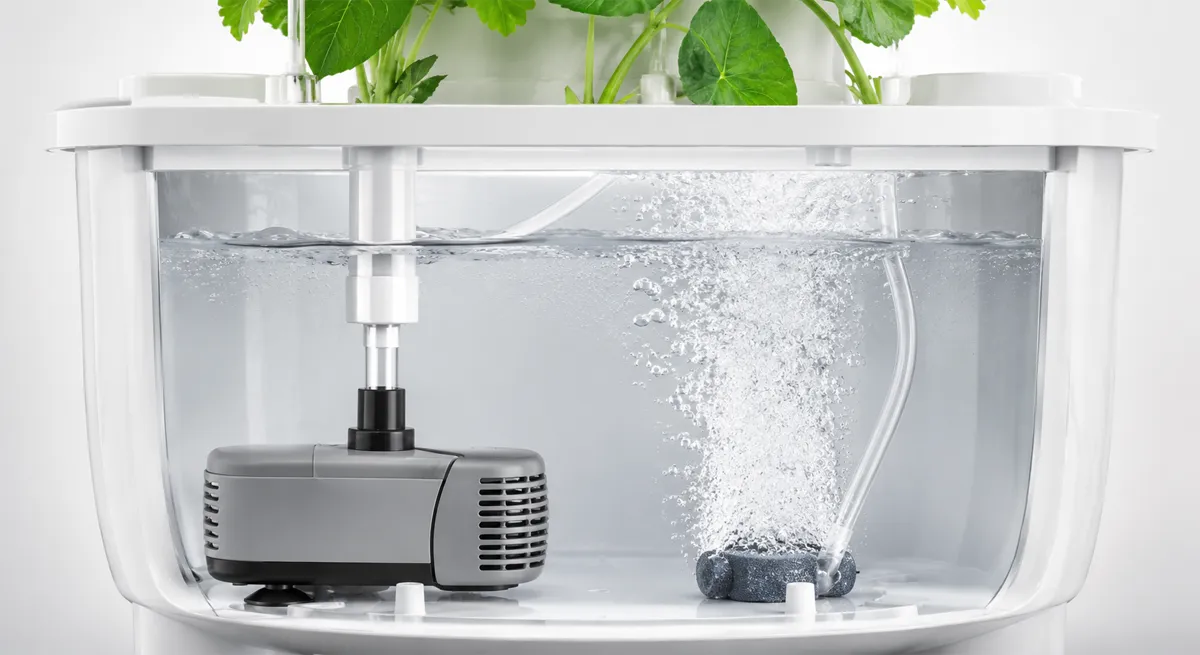
A tower pump must continue delivering water to the top of the system during hot conditions. The Yunzy V8 uses a robust 20W circulation pump. Always visually confirm that the pump intake remains submerged, hoses are not folded, roots are not blocking the outlet, and that water successfully reaches the highest planting level.
5. Protect Oxygen Around the Roots
Warm water naturally holds less dissolved oxygen than cooler water. Normal circulation from the top of a tower helps introduce oxygen as the water falls. However, an air pump and air stone may provide vital additional oxygen if the nutrient solution remains warm or if roots become densely packed. (Recommended dissolved oxygen is typically above 5-6 mg/L).
6. Check the Reservoir More Frequently
Water levels fall faster during hot weather due to increased transpiration and evaporation. Check the reservoir at least once daily. When topping up, always measure the EC (Electrical Conductivity) before blindly adding more concentrated fertilizer, as plants may consume water faster than they consume minerals.
7. Avoid Sudden Water-Temperature Changes
When the reservoir becomes too warm, do not dump large amounts of loose ice directly into the nutrient solution. This dilutes the nutrients and shocks the root zone. For temporary emergency cooling, use sealed frozen water bottles placed in the reservoir and rotate them as needed.
8. Choose Crops That Match the Season
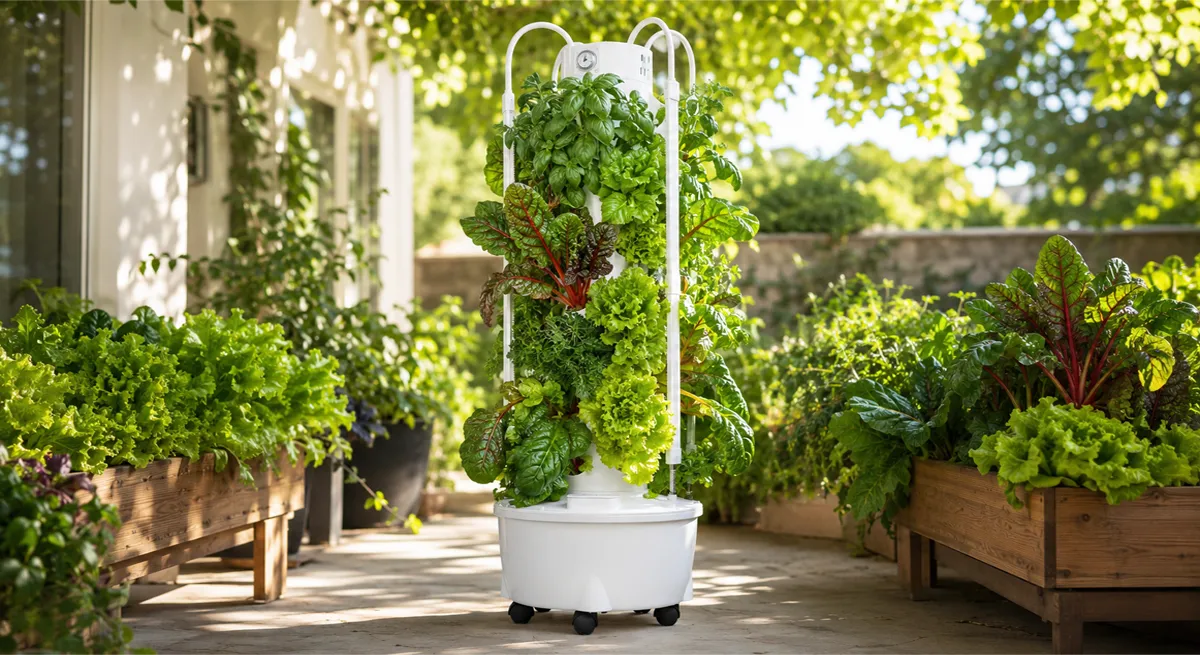
Summer crop selection drastically reduces the amount of cooling intervention required. Instead of highly sensitive cool-season greens, opt for heat-tolerant varieties:
- Basil & Mint
- Swiss chard
- Heat-tolerant / Slow-bolting / Summer crisp lettuce
- Watercress
- Heat-tolerant Asian greens & Leaf amaranth
9. Give Large Plants More Space
Plants in high light and warm temperatures develop quickly. The Yunzy V8 provides 40 planting sites, but overcrowding can restrict critical airflow and mask root problems or pests. Leave selected sites empty where necessary to allow large summer crops proper ventilation.
10. Harvest During the Cooler Part of the Day
Harvest leafy vegetables early in the morning when plants are fully hydrated and temperatures are lowest. During a heat wave, harvest mature crops promptly rather than leaving them exposed to additional heat, which can turn lettuce bitter.
11. Keep the Reservoir and Tower Clean
Warm water, nutrients, and light are the perfect recipe for algae. Keep light out of the reservoir and use covers for unused planting openings. Remove dead roots and fallen plant material immediately before they decompose and rob the water of precious oxygen.
Summer Monitoring Schedule & Emergency Checklist
Routine Monitoring Schedule
| Frequency | Recommended Check |
| Every morning | Water level, pump flow, and overall plant condition. |
| During hot afternoons | Air and nutrient-solution temperature. |
| Daily (during heat waves) | Verify shade covers, check for wilt, leaks, and dropping reservoir levels. |
| Every few days | Measure and adjust EC (Electrical Conductivity) and pH. |
| Weekly | Inspect roots, hoses, the 20W pump, and the top water distributor. |
| Between crops | Full reservoir and tower cleaning/sanitization. |
Emergency Heat-Wave Checklist
1.Refill the reservoir to the correct operating level.
2.Confirm that the pump is circulating normally.
3.Move or heavily shade the reservoir.
4.Install temporary afternoon shade over sensitive crops.
5.Check the water temperature (add sealed frozen water bottles if critically high).
6.Confirm that hoses and outlets are clear of root blockages.
7.Increase monitoring rather than immediately increasing fertilizer.
8.Harvest mature lettuce and other heat-sensitive greens before they bolt.
9.Inspect the system again in the late afternoon.
10.Remove severely damaged plants that may attract pests or affect neighboring crops.
Common Summer Mistakes to Avoid
- Adding nutrients every time water drops: Measure EC first. Water evaporates, but minerals stay behind.
- Sitting on hot concrete: Paving stores heat and continuously warms the tank.
- Wrapping the tower too tightly: Shade cloth must allow hot air to escape.
- Ignoring the highest planting sites: Pump pressure drops often affect the top tier first.
- Waiting too long to harvest: Harvesting early is far better than keeping an over-mature plant that turns bitter during a heat wave.
Frequently Asked Questions (FAQ)
What water temperature is too hot for a hydroponic tower?
For hydroponic lettuce, a commonly referenced range is 65°F to 80°F (72°F to 75°F is optimal). Persistent temperatures near or above 80°F require intense monitoring of roots and oxygen.
Should the pump run continuously during a heat wave?
Not automatically. Check root moisture and water distribution first. Over-running the pump can sometimes add mechanical heat to the water.
Which Yunzy V8 version is better for summer?
For an outdoor location with sufficient natural sunlight, the no-light V8 is usually the simpler summer option. For indoor rooms or shaded patios, the version with eight 15W LED light bars provides perfectly controlled lighting.
Final Thoughts
A hydroponic tower garden can continue producing beautiful, healthy vegetables throughout the summer, provided the root zone is actively managed. For the Yunzy V8, prioritize protecting the 12-gallon reservoir from direct afternoon sun, maintaining the 20W pump’s strong circulation, and utilizing strategic crop spacing across its 40 sites.
Do not wait until the entire tower is wilted before making changes. Small, proactive actions—such as erecting a shade cloth, topping up with clean water, monitoring the EC/pH, or harvesting mature lettuce early—can prevent major crop losses. With proper heat-tolerant crop selection and consistent monitoring, your Yunzy V8 can remain a highly productive centerpiece of your summer garden.
The Yunzy V8 is available with LED grow lights for indoor growing and without lights for natural-light locations. Contact Yunzy for complete growing accessories, summer product specifications, installation guidance, and dedicated after-sales service.

0 Comments