
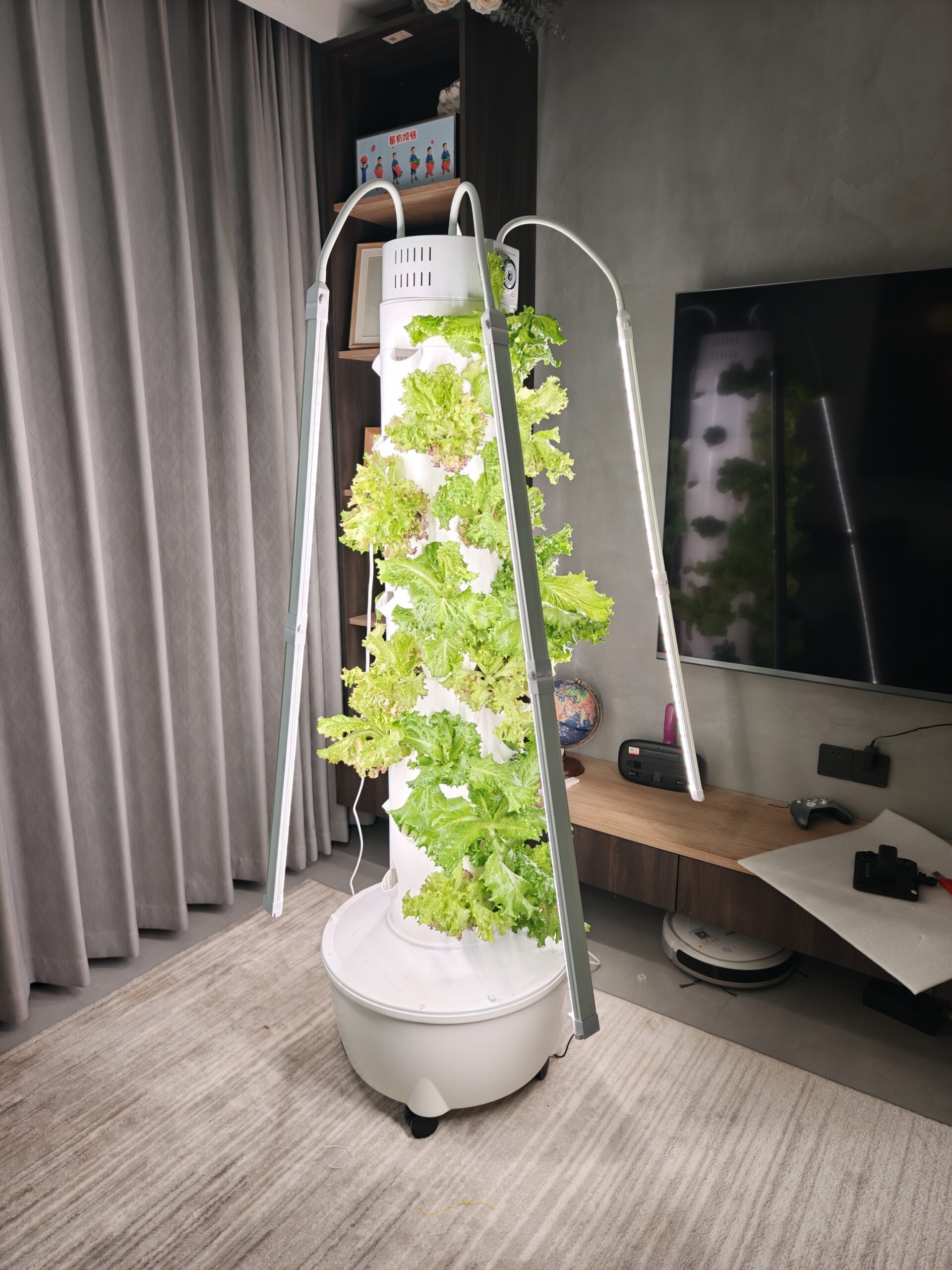
Enter the indoor hydroponic herb garden. By removing soil from the equation and automating light and water delivery, this modern technology allows you to grow premium, restaurant-quality herbs inside your home 365 days a year.
1. The Science of Flavor: Why Indoor Hydroponic Herb Garden Taste Better
A common misconception is that soil gives herbs their distinct taste. In reality, flavor comes from essential oils synthesized by the plant. An indoor hydroponic system optimizes the exact variables needed to maximize these oils:
- Targeted Root Nutrition: In a hydroponic setup, plant roots are suspended in a highly oxygenated water-and-nutrient solution. Instead of spending energy fighting through dense soil to look for food, the plant absorbs nutrients instantly via active transport. This excess energy is redirected into producing lush foliage and highly concentrated aromatic oils.
- Controlled Climate, Zero Stress: Indoor growing eliminates extreme weather shifts, heavy winds, and unexpected pests. When herbs grow in a stable, stress-free climate, they develop tender, uniform leaves with a cleaner, sweeter flavor profile than their outdoor counterparts.
2. Overcoming the Limitations of Indoor Spaces
Growing plants inside a home introduces a unique set of challenges that traditional gardening cannot solve. Hydroponic engineering bypasses these obstacles effortlessly:
[Window Soil Pot]: Low light ➡️ Stagnant roots ➡️ Slow growth ➡️ Soil pests
[Indoor Hydroponics]: Full-spectrum LED ➡️ Aerated water ➡️ 3x Faster growth ➡️ 100% Sterile
- The Light Problem Solved: The primary reason indoor plants fail is a lack of quality sunlight. Premium indoor hydroponic gardens feature integrated, full-spectrum LED grow lights. These lights mimic the exact PAR (Photosynthetically Active Radiation) wavelengths of natural summer sun, ensuring compact, bushy growth rather than spindly, stretched stems.
- Zero Soil, Zero Pests: Soil-borne pests like fungus gnats thrive in damp potting dirt. Moving to a closed-loop water system makes your indoor environment completely sterile. No dirt on the counter, no bugs in the kitchen.
- No Daily Watering Chores: Herbs have high water requirements but are highly sensitive to root rot if left in stagnant mud. Hydroponic systems utilize automatic timers that cycle water and air, ensuring the roots stay perfectly hydrated and highly oxygenated.
3. Best Varieties for an Indoor Hydroponic Herb Garden
While almost any leafy plant thrives in water, certain herbs are perfectly tailor-made for an indoor vertical or countertop hydroponic layout:
- Basil (Genovese, Thai, Lemon): The undisputed king of hydroponics. Basil thrives in automated water systems, yielding massive, glossy leaves at an astonishingly fast rate.
- Mint (Spearmint, Peppermint): In soil, mint is invasive and suffocates other plants. In a hydroponic system, its root zone is contained, allowing you to harvest crisp, fragrant leaves continuously.
- Parsley & Cilantro: These delicate annuals prefer a consistent supply of moisture. Hydroponics prevents them from prematurely bolting (going to seed), keeping the leaves sweet and flavorful for months.
- Thyme & Oregano: While traditionally Mediterranean, these herbs adapt beautifully to the high-oxygen root environment of modern vertical towers, developing dense, bushy growth.
4. The Aesthetics of “Home Decor Gardening”
For a long time, home hydroponic systems were treated as clunky, unappealing laboratory experiments hidden away in basements. Today, modern urban design has ushered in the era of Home Decor Gardening.
An indoor hydroponic herb garden is no longer just a functional appliance; it is a piece of living interior architecture. Designed with sleek, minimalist lines, premium eco-friendly materials, and completely integrated wiring, it serves as a stunning visual centerpiece in a contemporary kitchen or living space.
【Old Utility Approach】 Clunky plastic box ➡️ Hidden away ➡️ Purely functional
【Modern Decor Approach】 Architectural column ➡️ Kitchen centerpiece ➡️ Living kinetic art
The contrast of vibrant, cascading greens against modern matte finishes or clean geometric lines adds an element of luxury to the home. It functions as a living art installation that purifies indoor air, brings a touch of nature into the concrete jungle, and serves as an interactive culinary station for family and guests.