
8 Best Summer Crops for a Hydroponic Tower Garden: Heat-Tolerant Vegetables and Herbs for the Yunzy V8
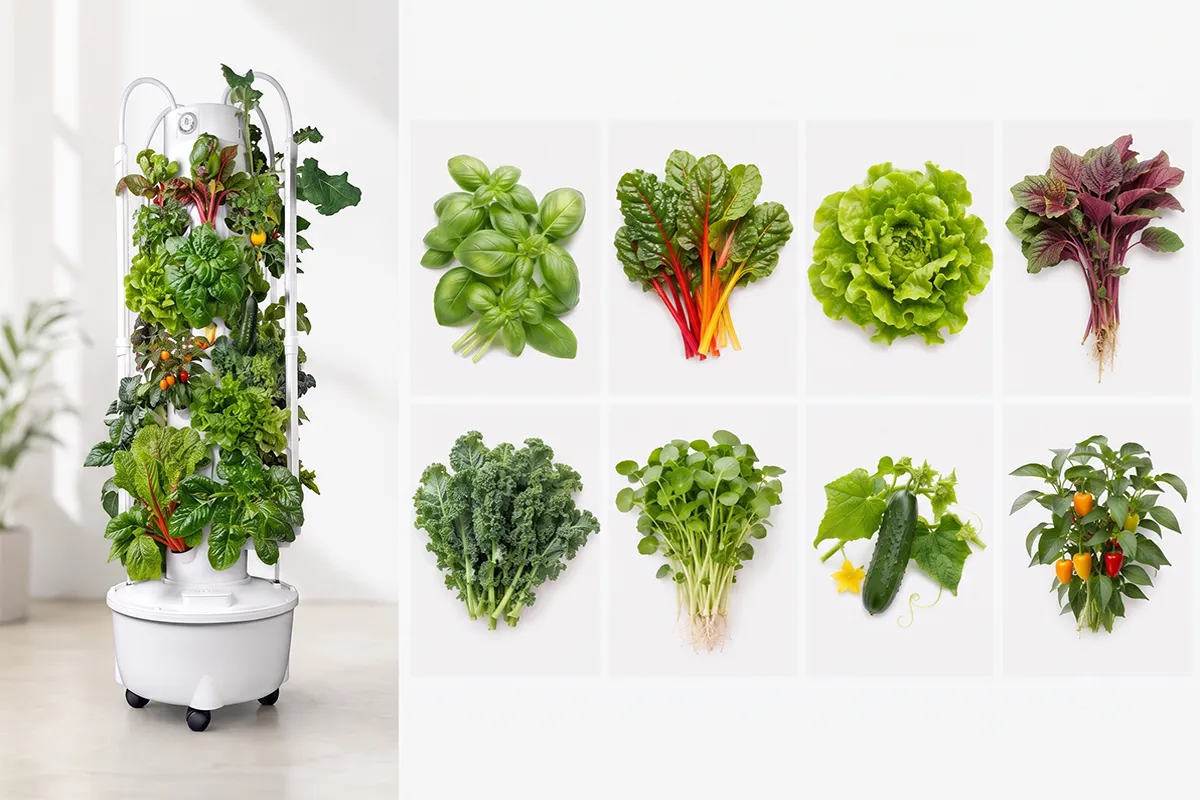
Summer can be one of the most highly productive seasons for a hydroponic tower garden, but only when your crop selection aligns with the rising temperatures. Many popular leafy greens—including standard spinach, cilantro, arugula, and traditional lettuce varieties—thrive in cooler conditions. However, during prolonged summer heat, these cool-season plants may grow sluggishly, develop bitter leaves, or prematurely begin flowering (bolting) before ever reaching a useful harvest size.
The solution is not to shut down your system for the season. Instead, growers must pivot to crops that naturally tolerate warm conditions, select specialized heat-resistant varieties, and adapt their spacing strategies to accommodate larger summer plants. This comprehensive guide introduces the eight best vegetables and herbs suited for summer hydroponic growing, complete with practical planting layouts and maintenance strategies for the 40-site Yunzy V8 hydroponic tower.
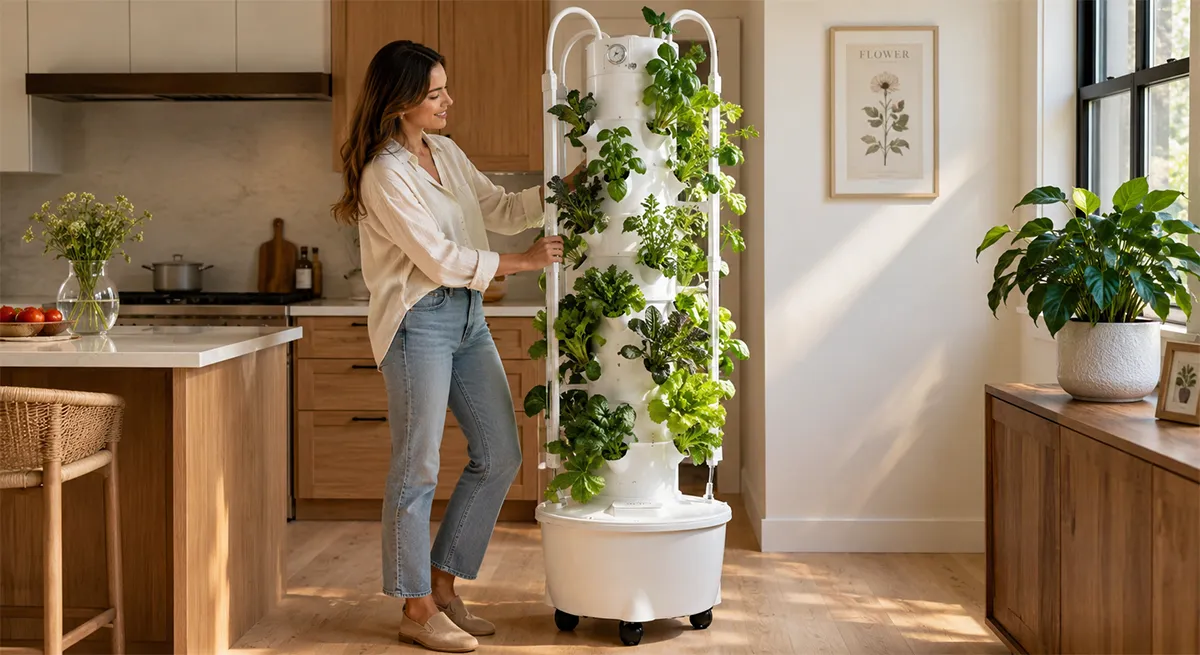
What Makes a Crop Suitable for Summer Hydroponics?
An ideal summer crop must be able to withstand higher ambient air temperatures without immediately bolting, turning bitter, or suffering from severe leaf degradation.
Furthermore, it must physically complement the vertical structure of a hydroponic tower. When selecting summer seeds, you should evaluate the following key factors:
- Heat tolerance and bolting resistance
- Mature plant size and canopy spread
- Root growth volume (to avoid clogging the tower)
- Support requirements (for fruiting vines)
- Harvest frequency and regrowth potential
- Light requirements
- Length of the overall growing cycle
- Sensitivity to warm nutrient solutions and lower oxygen levels
Warm-season hydroponic options are slightly more specific than cool-season crops. Basil, Swiss chard, compact cucumbers, and watercress have proven exceptionally reliable during warm-season production. Fruiting crops like tomatoes and peppers are also highly popular but demand more space, external support, and light than simple leafy greens.
Quick Comparison of the Best Summer Crops
| Crop | Summer Suitability | Space Needed | Difficulty Level | Harvest Style |
| Basil | Excellent | Medium | Easy | Repeated leaf & stem harvest |
| Swiss Chard | Excellent | Medium to Large | Easy | Outer-leaf harvest |
| Heat-Tolerant Lettuce | Good (with heat control) | Medium | Easy | Whole head or outer leaves |
| Leaf Amaranth | Very Good | Medium | Easy to Moderate | Young leaves and tender stems |
| Heat-Tolerant Kale | Good | Large | Moderate | Outer-leaf harvest |
| Watercress | Good (with stable water temp) | Small to Medium | Moderate | Repeated cutting |
| Compact Cucumber | Good | Large | Advanced | Repeated fruit harvest |
| Dwarf Pepper | Good | Large | Advanced | Repeated fruit harvest |
The 8 Best Heat-Tolerant Hydroponic Crops
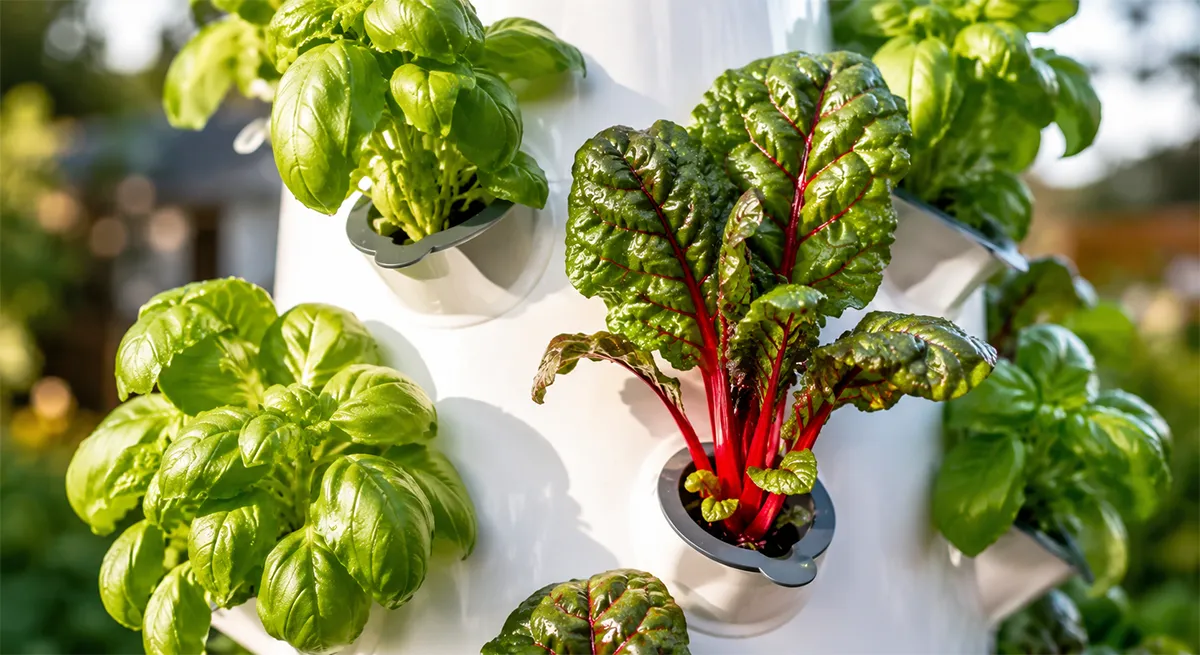
1. Basil
Basil is arguably the most reliable and rewarding plant for a summer hydroponic tower. Unlike delicate cool-season herbs, basil thrives and actively grows in warm conditions. It can be harvested repeatedly by cutting the stems just above a leaf node, which encourages the plant to develop more lateral branches and become beautifully bushy.
- Top Varieties: Genovese basil, Thai basil, Lemon basil, Purple basil, and Compact bush basil.
- Placement Suggestion: Plant basil in the upper or middle levels where it receives strong light and is easy to access for frequent pruning. Avoid placing multiple large basil plants directly next to each other to ensure good airflow. Always pinch off flower buds as they appear to maintain leaf flavor and continuous production.
2. Swiss Chard
Swiss chard is an outstanding leafy green for summer growing, boasting significantly better heat tolerance than spinach or standard lettuce. Both its broad leaves and colorful, crunchy stems are edible. The “cut-and-come-again” nature of Swiss chard means the plant will continue producing fresh foliage after you harvest the mature outer leaves.
- Top Varieties: Bright Lights, Fordhook Giant, Ruby Red, Barese, Lucullus.
- Placement Suggestion: Because Swiss chard grows quite large, place it around the middle and lower sections of the tower. Leave unused pockets or plant smaller herbs directly adjacent to them to prevent overcrowding.
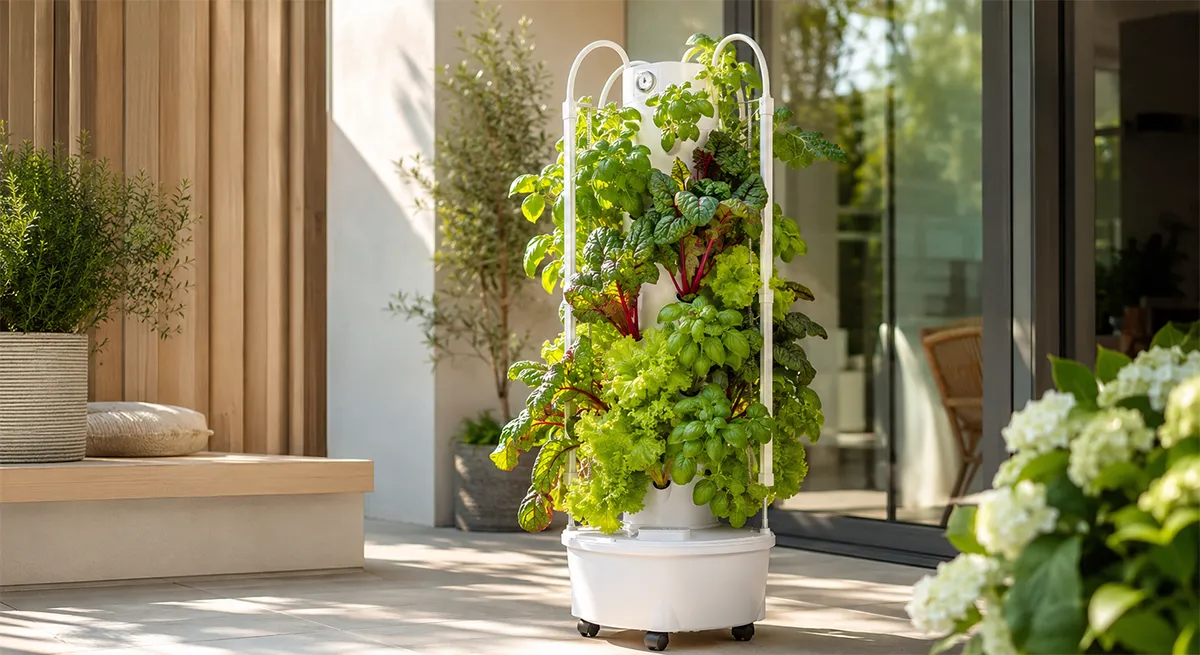
3. Heat-Tolerant Lettuce
While standard lettuce is notoriously a cool-season crop, summer production is entirely possible if you select the correct genetic varieties and manage your water temperatures. High temperatures naturally encourage bolting and bitterness, so specialized seeds are mandatory.
- Top Varieties: Look for seeds specifically labeled as “Heat Tolerant”, “Slow Bolting”, “Summer Crisp”, “Batavian”, or “Tipburn Resistant”.
- Placement Suggestion: Utilize the evenly illuminated middle planting levels. During a heat wave, it is far better to harvest your summer lettuce slightly early as a loose head, rather than waiting for an oversized head that may suddenly turn bitter overnight.
4. Leaf Amaranth
Leaf amaranth (often called Chinese spinach) is a superb, heat-loving alternative when traditional spinach inevitably fails in the summer. It grows rapidly in the warmth, and both its young leaves and tender stems are highly nutritious and excellent for cooking.
- Placement Suggestion: Amaranth can quickly grow tall. Use selected upper or middle planting sites and be diligent about harvesting the growing tips while the stems remain tender. Do not allow all amaranth plants on the tower to reach full maturity simultaneously, or they will severely shade the crops below.
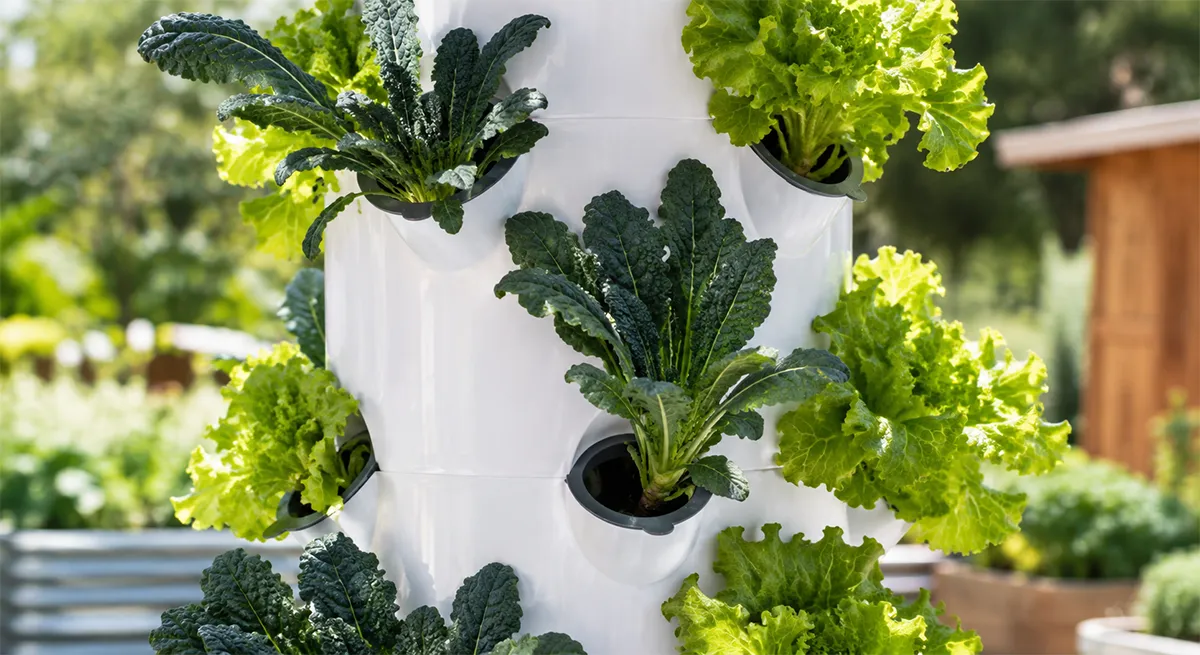
5. Heat-Tolerant Kale
Kale is traditionally a winter-hardy crop, but select varieties possess remarkable resilience to summer heat. These specific cultivars can be grown nearly year-round with appropriate water management and frequent harvesting.
- Top Varieties: Lacinato (Dinosaur Kale), Nero di Toscana, and specifically bred heat-tolerant leaf kale cultivars.
- Placement Suggestion: Kale plants can become exceptionally wide, heavy, and demanding on nutrients. Use only a limited number of pockets for kale, spreading them around different sides of the tower rather than stacking them directly above one another.
6. Watercress
Watercress is a moisture-loving aquatic plant that performs brilliantly in hydroponic environments. While the plant loves constant moisture, the reservoir must still be protected from excessive heat, as warm, poorly oxygenated water will damage the root zone even if the foliage looks healthy.
- Placement Suggestion: Place watercress in the lower or middle positions for convenient trimming. It has a creeping habit and will try to spread around neighboring planting pockets, so regular, aggressive cutting is required to keep it compact.
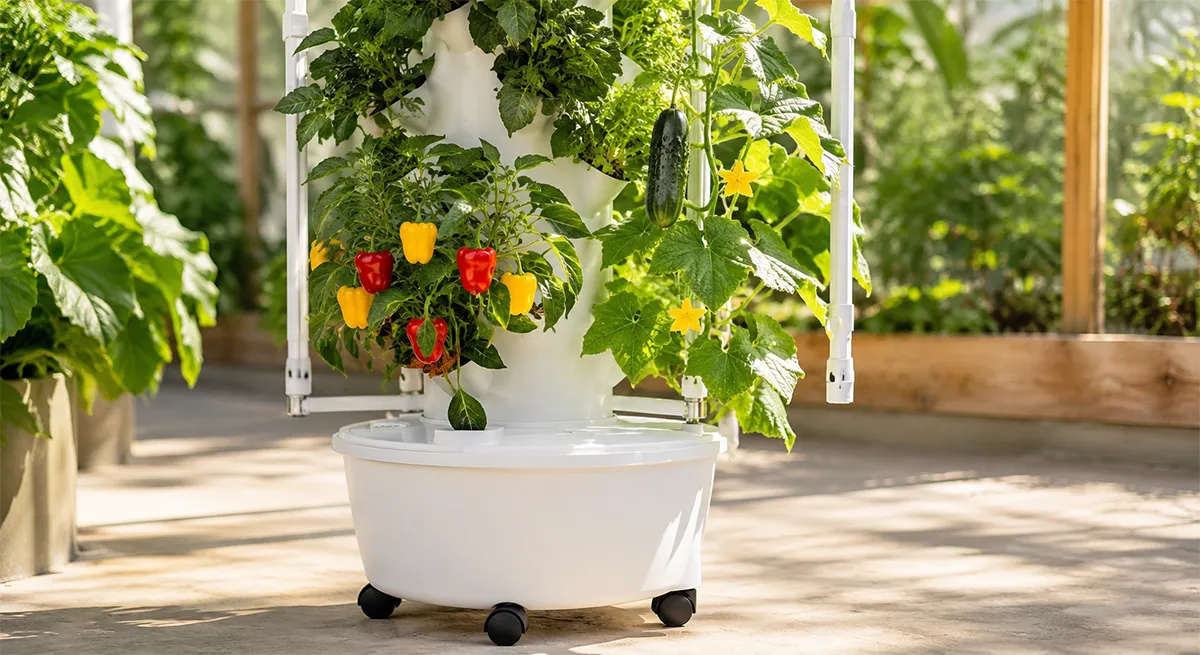
7. Compact Cucumbers
Cucumbers love summer warmth and thrive in outdoor hydroponic systems with strong natural light. However, they transition from a simple leafy green to an “advanced” crop because they require trellising, aggressive pruning, pollination assistance (depending on the variety), and significantly more root space.
- Top Varieties: Seek out seeds labeled “Compact”, “Patio”, “Bush”, “Mini”, “Short-vine”, or “Container Suitable”.
- Placement Suggestion: Never plant too many cucumbers on a single tower. Use one or two lower/middle planting sites and direct the rapid vine growth onto an external trellis or support string. Do not allow heavy mature fruit to hang entirely unsupported from the tower’s planting pocket.
8. Dwarf Peppers
Compact pepper plants revel in the summer heat and are a fantastic addition to a diverse hydroponic tower. Like cucumbers, they are more demanding than simple herbs. They require strong, direct light, a longer overall production cycle, and a shift in nutrient ratios once flowering begins.
- Top Varieties: Patio peppers, Mini bell peppers, Dwarf chili peppers.
- Placement Suggestion: Dedicate only a few specific sites to peppers. Place them where the mature, rigid plant structure will not block the integrated LED light bars (if growing indoors) or cast heavy shade over multiple levels of smaller leafy greens below.
Bonus Summer Crop: Compact Cherry Tomatoes
Growing cherry tomatoes on a summer tower is incredibly rewarding but strictly falls into the “advanced” category. They demand intense sunlight, substantial physical support, precise pruning, manual pollination, massive root space, and crop-specific nutrient blends.
Avoid standard indeterminate varieties that will completely overrun the tower. Stick exclusively to dwarf, patio, or determinate micro-tomato cultivars, and limit yourself to just one or two plants per system.
Crops to Avoid During Peak Summer Heat
To save yourself frustration, avoid planting cool-season crops during the peak of summer. You do not need to abandon them entirely; simply pause their production and restart them from seed when temperatures become milder in the fall.
| Crop to Avoid | Reason for Summer Failure | Recommended Summer Alternative |
| Standard Spinach | Germinates poorly in heat; bolts almost immediately when temperatures rise. | Swiss Chard or Leaf Amaranth |
| Cilantro (Coriander) | Grows rapidly but flowers (bolts) aggressively in warm weather, losing its culinary value. | Basil or Heat-Tolerant Parsley |
| Arugula (Rocket) | Leaves become excessively spicy, bitter, and tough; flowers quickly. | Watercress or Young Kale |
| Standard Bok Choy | Highly sensitive to temperature stress; prone to bolting before forming a tight base. | Specialized Heat-Tolerant Asian Greens |
| Butterhead / Iceberg Lettuce | Develops severe tipburn, bitter flavor profiles, and tall, unsightly central stems. | Summer Crisp or Batavian Lettuce |
Example Summer Planting Plan for the Yunzy V8
The Yunzy V8 features eight robust planting levels, offering a total of 40 planting sites. However, utilizing all 40 sites simultaneously is rarely the best strategy for mature, bushy summer crops.
Leaving selected openings empty dramatically improves crucial air movement, allows better light distribution, provides space for large leaves, and makes harvesting and pest inspection far easier. (Note: Always cover unused openings to prevent light from entering the tower and triggering algae growth).
A highly practical mixed summer planting plan might utilize approximately 28 to 32 active sites:
| Crop Type | Suggested Number of Plants | Ideal Placement Level |
| Basil (Compact) | 8 | Upper & Middle |
| Heat-Tolerant Lettuce | 8 | Middle |
| Swiss Chard | 6 | Middle & Lower |
| Leaf Amaranth | 4 | Upper |
| Dwarf Peppers | 2 | Lower (with support) |
| Compact Cucumbers | 2 | Lower (with trellis) |
| Open Sites for Spacing / Airflow | 10 | Distributed evenly |
| Total Tower Sites | 40 |
Summer Crop Selection by Growing Goal
- For Easiest Maintenance (Beginner Friendly): Focus purely on Basil, Swiss chard, and Heat-tolerant lettuce. These are straightforward to harvest and require absolutely zero heavy fruit support or pruning.
- For Repeated “Cut-and-Come-Again” Harvests: Plant heavy on Basil, Swiss chard, Kale, Watercress, and Leaf amaranth. Harvesting the outer leaves or trimming the stems allows the core of the plant to continuously generate fresh food all summer.
- For Maximum Variety (Advanced): Incorporate Dwarf peppers, Compact cucumbers, and Patio cherry tomatoes. These introduce incredible visual diversity and culinary options to the tower but demand vigilant nutrient management and physical trellising.
- For Maximum Planting Density: If you absolutely must use every single pocket, stick exclusively to compact crops like bush Basil, summer crisp lettuce, small amaranth, and watercress. Never fill all 40 sites with massive plants like chard, kale, or cucumbers.
Basic Summer Growing Tips
Choosing the right genetic varieties makes summer growing significantly easier, but it does not completely immunize your tower against extreme heat stress. During peak hot weather, always remember to:
- Protect the water reservoir from strong, direct afternoon sun to prevent the nutrient solution from boiling the roots.
- Maintain reliable, uninterrupted water circulation and keep the water level well above the pump intake.
- Monitor pH and EC levels constantly, as rapid water evaporation will concentrate the mineral salts left behind.
- Provide 30% to 50% shade cloth during intense heat waves, depending on your local climate conditions.
- Harvest aggressively before delicate plants become overmature and turn bitter.
Frequently Asked Questions (FAQ)
What is the easiest crop to grow in a hydroponic tower during summer?
Basil and Swiss chard are unequivocally the most reliable options. Both tolerate brutal warm conditions significantly better than traditional cool-season leafy crops and require minimal maintenance.
Can lettuce really grow in a hydroponic tower during the summer?
Yes, but you must use seeds specifically labeled as heat-tolerant, slow-bolting, or summer-crisp. Even with these specialized varieties, afternoon shade and strict reservoir-temperature management are often necessary.
Can cucumbers and peppers grow on the same tower as leafy greens?
They can, but it is a delicate balancing act. Peppers and cucumbers become much larger, heavier, and have longer growing cycles. Use only a few fruiting plants and closely monitor the EC levels to ensure their high nutrient demands remain somewhat compatible with the surrounding leafy greens.
Should I attempt to grow spinach during peak summer?
No. Traditional spinach is exceptionally difficult to cultivate in prolonged heat and will almost certainly bolt. Swiss chard or leaf amaranth serve as excellent, heat-loving culinary substitutes.
Final Thoughts
The “best” summer crop is not simply the plant that manages to survive the highest thermometer reading. It must be a crop that seamlessly fits the available physical space on your tower, aligns with your lighting conditions, shares a compatible nutrient system, and matches your personal harvesting routine.
For beginners, the most bulletproof summer starting combination is Basil, Swiss chard, heat-tolerant lettuce, and leaf amaranth. Once you master the basics, you can confidently introduce a limited number of advanced fruiting crops like compact cucumbers, dwarf peppers, or patio tomatoes.
While the Yunzy V8 generously offers 40 planting sites, achieving spectacular summer production does not require cramming a plant into every single opening. By thoughtfully spacing your crops, harvesting regularly, and selecting the correct heat-tolerant genetic varieties, your hydroponic tower garden will reward you with an uninterrupted, abundant supply of fresh food—even through the hottest days of the year. Contact Yunzy to learn more about planting techniques.

0 Comments