Are Hydroponic Towers Food Safe?
What Should You Check Before Buying?
- Water-contact materials are identified, not described only as ‘safe plastic.’
- The reservoir, tubing, fittings, seals, and net cups are covered by the product specification—not only the tower body.
- The reservoir is opaque so sunlight cannot easily reach the nutrient solution and feed algae.
- Outdoor models use UV-stabilized material and do not become brittle after normal sun exposure.
- Internal surfaces are smooth and removable parts are easy to reach during cleaning.
- The seller offers replacement parts for components that may crack, warp, or wear over time.
Which Materials Are Suitable for Hydroponic Towers?
The material name is a starting point. The finished product, additives, manufacturing quality, and intended use still matter.
| Material | Typical use | Buyer check |
| PP | Tower sections and reservoirs | Food-contact documentation, UV stability, and no strong odor |
| HDPE | Reservoirs and fittings | Opaque construction and suitable temperature range |
| Rigid PVC | Pipes and channels | Potable-water grade; avoid flexible PVC of unknown composition |
| PETG | 3D-printed towers | Traceable filament, smooth print, suitable nozzle, and thorough cleaning |
| PLA | Hobby prints | Usually less suitable for long-term heat, moisture, and repeated cleaning |
Is PP Safe for Hydroponics?
PP, or polypropylene, is widely used for food containers and water-handling products and is often a strong choice for a molded hydroponic tower. Still, ask about the actual resin, colorants, UV protection, and intended use instead of relying only on resin code 5.
Is BPA-Free the Same as Food Safe?
No. BPA-free addresses one chemical. It does not confirm every additive, prove UV resistance, or show that the finished system is easy to keep sanitary. Look for the base material and product-specific documentation as well.
Are 3D-Printed PETG Towers Food Safe?
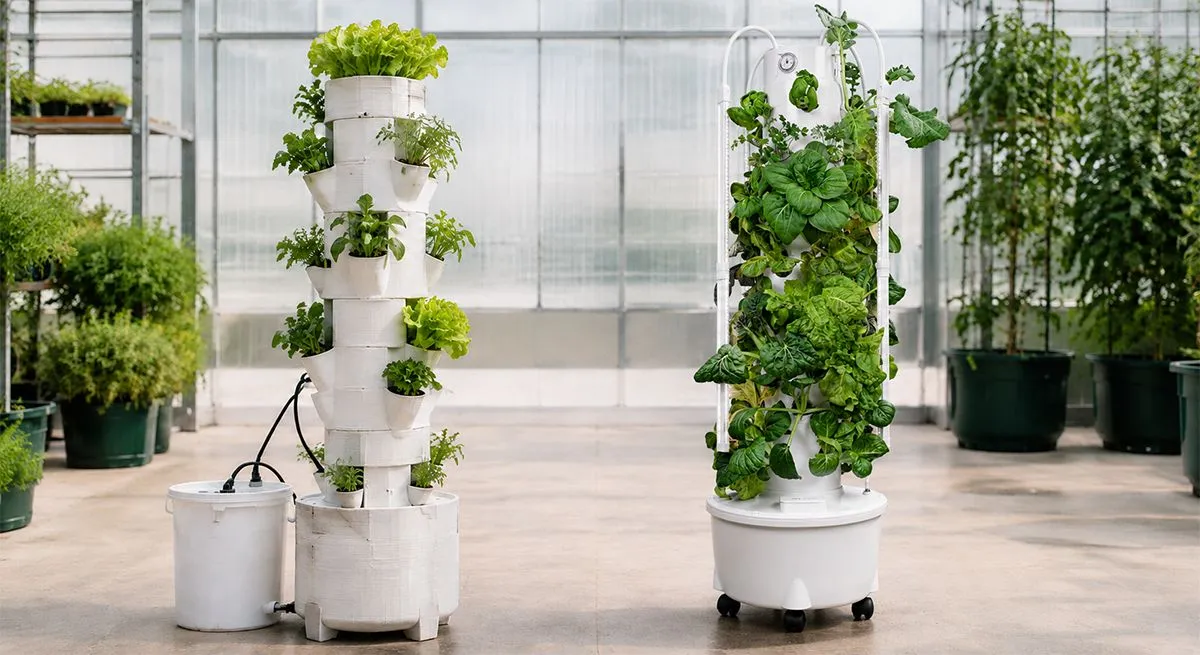
They can be used, but cleaning is the main concern. Layer lines and small gaps can hold residue and biofilm, while filament additives and printer nozzles vary. A smooth molded surface is generally easier to clean consistently.
What Can Make a Hydroponic Tower Unsafe?
- Unknown or recycled plastic with no traceable specification.
- A clear reservoir that allows algae to grow.
- Cracked, deeply scratched, warped, brittle, or chalky parts.
- Water that becomes too warm or contains decaying roots and leaves.
- Nutrients not intended for edible crops or used above the label rate.
- Poor cleaning of the reservoir, pump, tubing, channels, and harvesting tools.
How to Keep a Hydroponic Tower Food Safe?
- Use clean water and nutrients made for edible hydroponic crops.
- Keep the reservoir shaded and monitor water temperature during hot weather.
- Remove fallen leaves, dead roots, and blocked material before they decay.
- Clean the complete system between growing cycles; clean sooner if you see algae, slime, odor, or clogged channels.
- Use clean hands, scissors, and containers when harvesting.
- Replace damaged plastic instead of trying to keep a cracked or badly scratched part in service.
Food-Safe Materials in Yunzy Hydroponic Towers
Yunzy hydroponic towers use food-grade PP with UV protection in the main molded tower structure. The opaque reservoir helps limit light inside the nutrient solution, and the smooth molded parts are easier to clean than rough printed surfaces. Check the current specification for the exact model and market before making a formal compliance claim.
Frequently Asked Questions
What is the safest plastic for a hydroponic tower?
PP and HDPE are commonly suitable choices. Rigid potable-water-grade PVC may also be appropriate. Product-specific documentation matters more than the resin name alone.
Can plastic leach into hydroponic water?
Risk increases with excessive heat, strong UV exposure, harsh chemicals, and damaged plastic. Use verified materials within their intended conditions and replace worn parts.
How often should a hydroponic tower be cleaned?
Remove debris during use and clean thoroughly between growing cycles. Clean immediately if you notice algae, slime, odor, unhealthy roots, or restricted water flow.
Is an opaque reservoir necessary?
It is strongly recommended because blocking light makes algae easier to control and keeps the water path cleaner.
Bottom Line
A food-safe hydroponic tower should combine traceable water-contact materials, an opaque reservoir, UV-resistant construction where needed, and a design that is easy to clean. If a seller cannot clearly answer those points, keep looking.

0 Comments