Hydroponic Tower Buying Guide
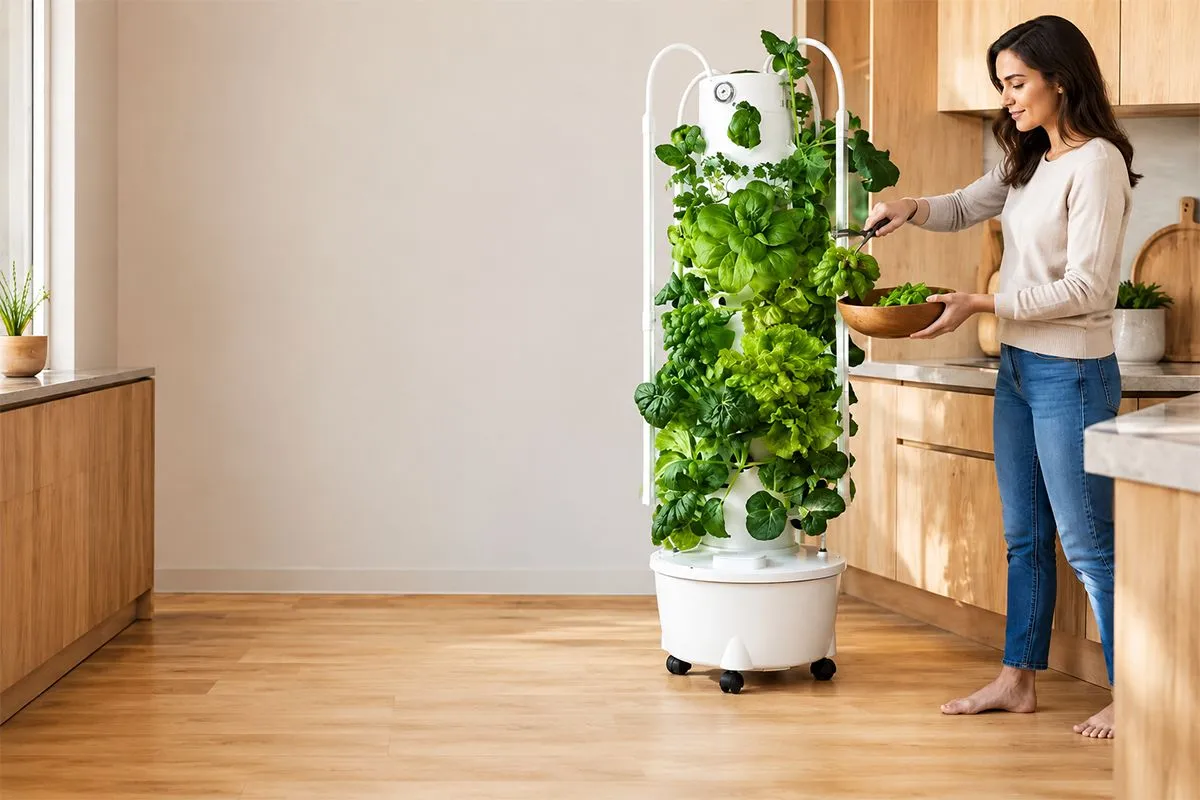
Quick answer: Buy the tower that fits your available space and crops, provides enough light, has an accessible reservoir and replaceable pump, is easy to clean, uses clearly identified materials, and comes with spare parts. Planting-site count should not be the deciding factor.
What Should You Check Before Buying?
| QUESTION | WHAT TO LOOK FOR |
| Will it fit? | Measure the footprint, total height, light frame, plant spread, and reservoir access. |
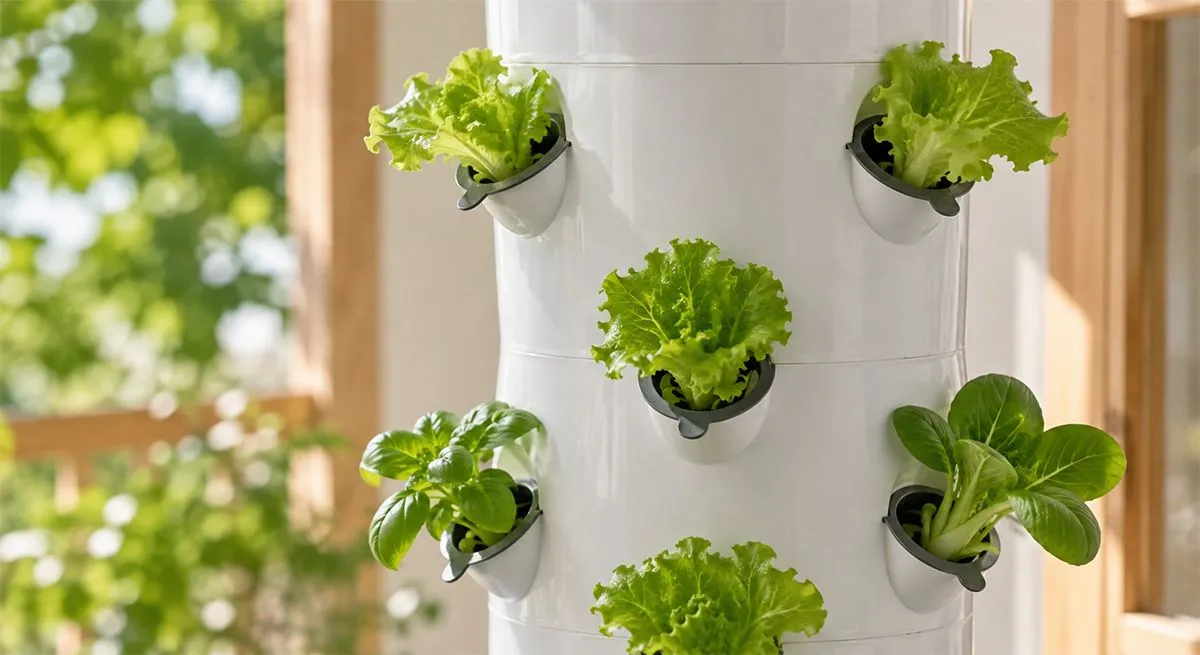
| What will you grow? | Leafy greens and herbs can use more sites; tomatoes and other large crops need empty ports and support. |
| Does it need lights? | Indoor towers usually need even light coverage, a timer, known wattage, and replaceable light bars. |
| Is the water system practical? | Choose an accessible reservoir, adequate pump lift, even flow, and simple tubing. |
| Will it be noisy? | Ask for a real sound demonstration if the tower will be near a desk, television, or bedroom. |
| Can it be cleaned? | Look for removable levels, smooth surfaces, a wide tank opening, and easy pump access. |
| Can it be repaired? | Confirm that pumps, tubing, baskets, lights, connectors, and seals are sold separately. |
1. Choose Size by Space and Crop
Measure the floor area, ceiling height, light frame, and the space needed to open the reservoir or remove plants. Mature leaves extend beyond the tower body, so product dimensions alone may understate the space required.
Do not treat planting sites as guaranteed harvest capacity. Herbs and compact greens can use more ports. Lettuce needs more spacing as it matures. Tomatoes, peppers, cucumbers, and other fruiting crops need stronger light, support, root room, and several nearby ports left empty.
Yunzy Tower Sizes at a Glance
| MODEL | SITES | BEST FIT |
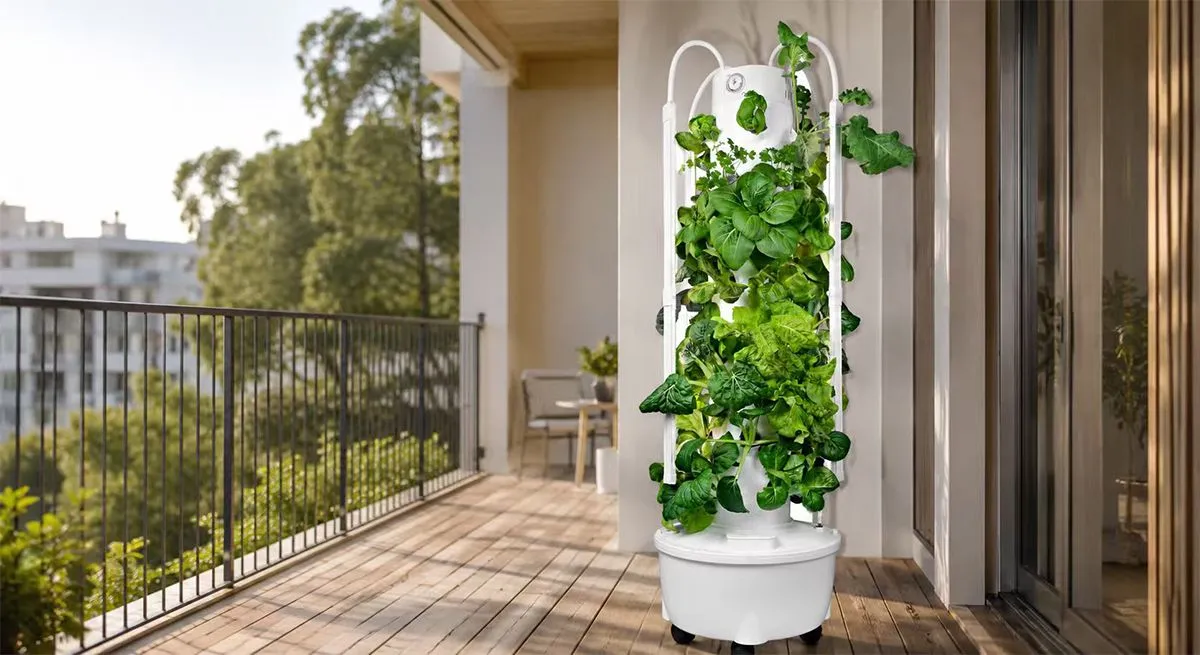
| V8 | 40 | Homes, patios, balconies, and small greenhouses |
| V12 | 60 | Families, regular home growers, restaurants, and indoor projects |
| V16 | 80 | Greenhouses, hospitality, outdoor growing, and small tower farms |
2. Check the Lights and Electricity Use
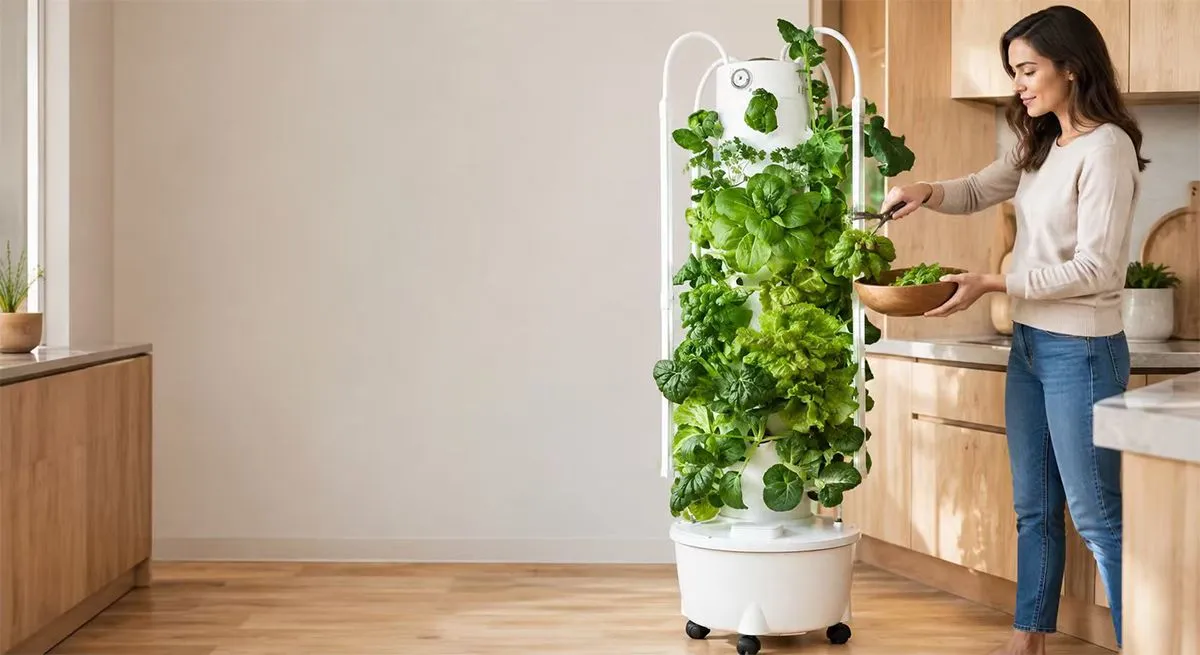
Indoor towers usually need grow lights unless they receive strong, dependable natural light. Ask whether the light reaches the lower sites, whether a timer is included, how many watts the system draws, and whether one failed light bar can be replaced separately.
A greenhouse or outdoor tower may not need integrated lights. Do not pay for a lighting system you will not use, but do not underestimate how weak indoor window light can be.
3. Inspect the Reservoir, Pump, and Noise
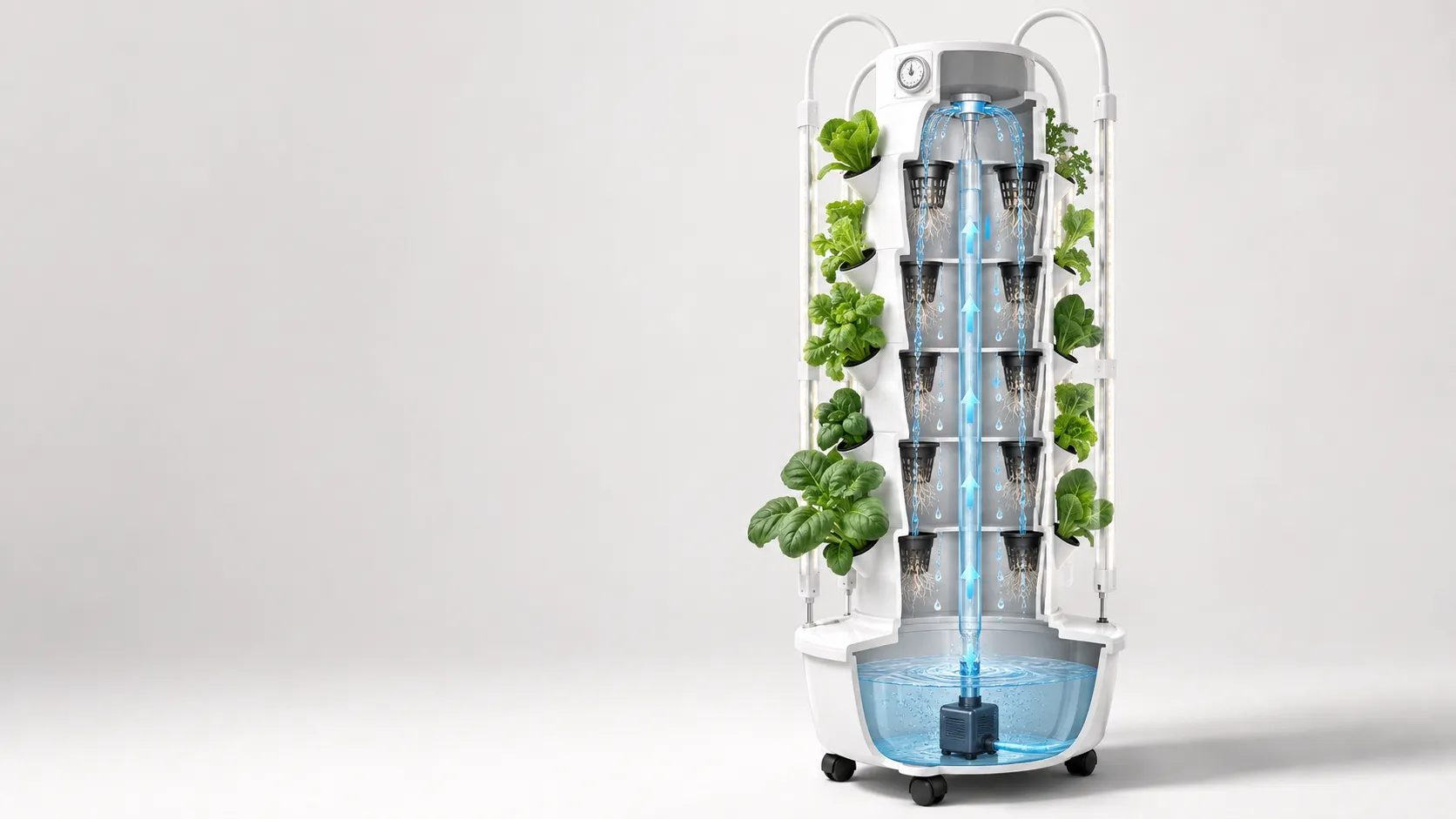
Reservoir access matters as much as volume. You should be able to see the water level, test pH and EC, add nutrients, remove the pump, and clean the tank without lifting or tipping the entire tower.
Confirm the pump’s maximum lift height, whether flow is adjustable, how water reaches the top level, and whether roots can block the channels. A standard, replaceable pump is safer than a proprietary unit with no spare-part option.
If the tower will be indoors, ask for a real noise demonstration. Pump vibration, splashing, and low water levels can make a system much louder than expected. No recirculating tower is completely silent.
4. Make Sure It Is Easy to Clean
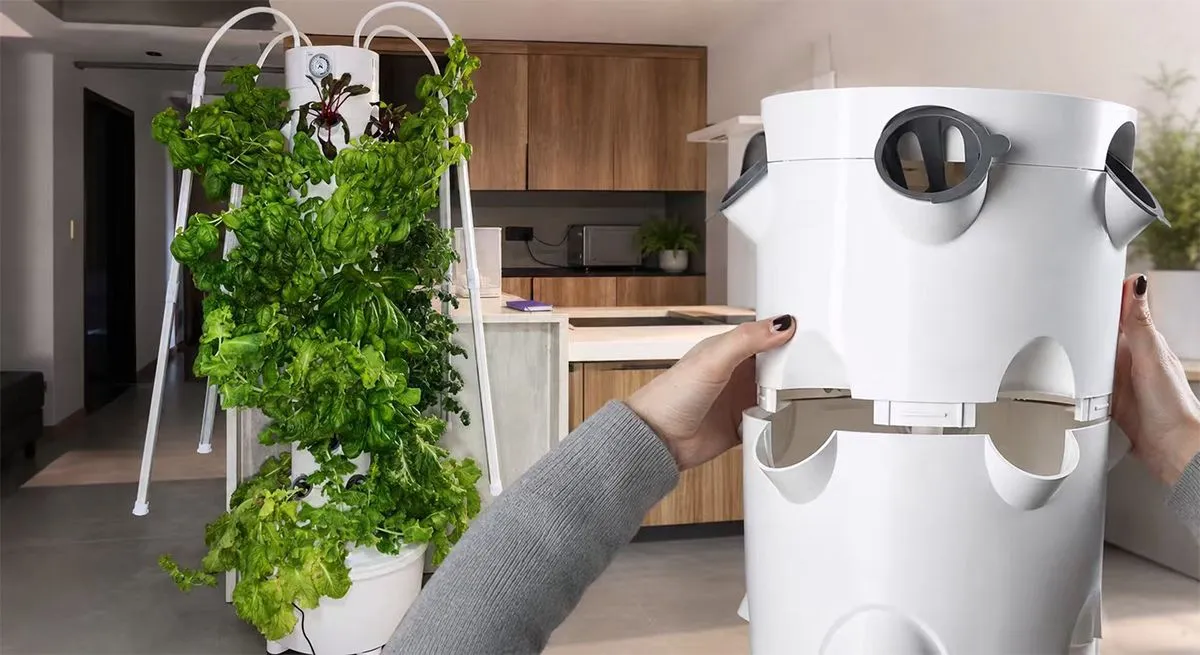
Choose removable tower levels, smooth internal surfaces, a reservoir opening large enough for your hand, and tubing that can be reached or replaced. Narrow passages, rough surfaces, and inaccessible pump housings collect roots, algae, and mineral residue.
The seller should be able to explain how to drain the tank, remove the pump, clean the water channels, and reassemble the system. If routine cleaning is unclear before purchase, it will not become easier after the tower is full of plants.
5. Confirm the Water-Contact Materials
Do not rely only on the words ‘food safe’ or ‘BPA-free.’ Ask what the reservoir, tower body, tubing, fittings, seals, and baskets are made from. For outdoor use, confirm UV resistance and suitability for temperature changes. Learn more about hydroponic tower materials
6. Compare the Ready-to-Grow Cost
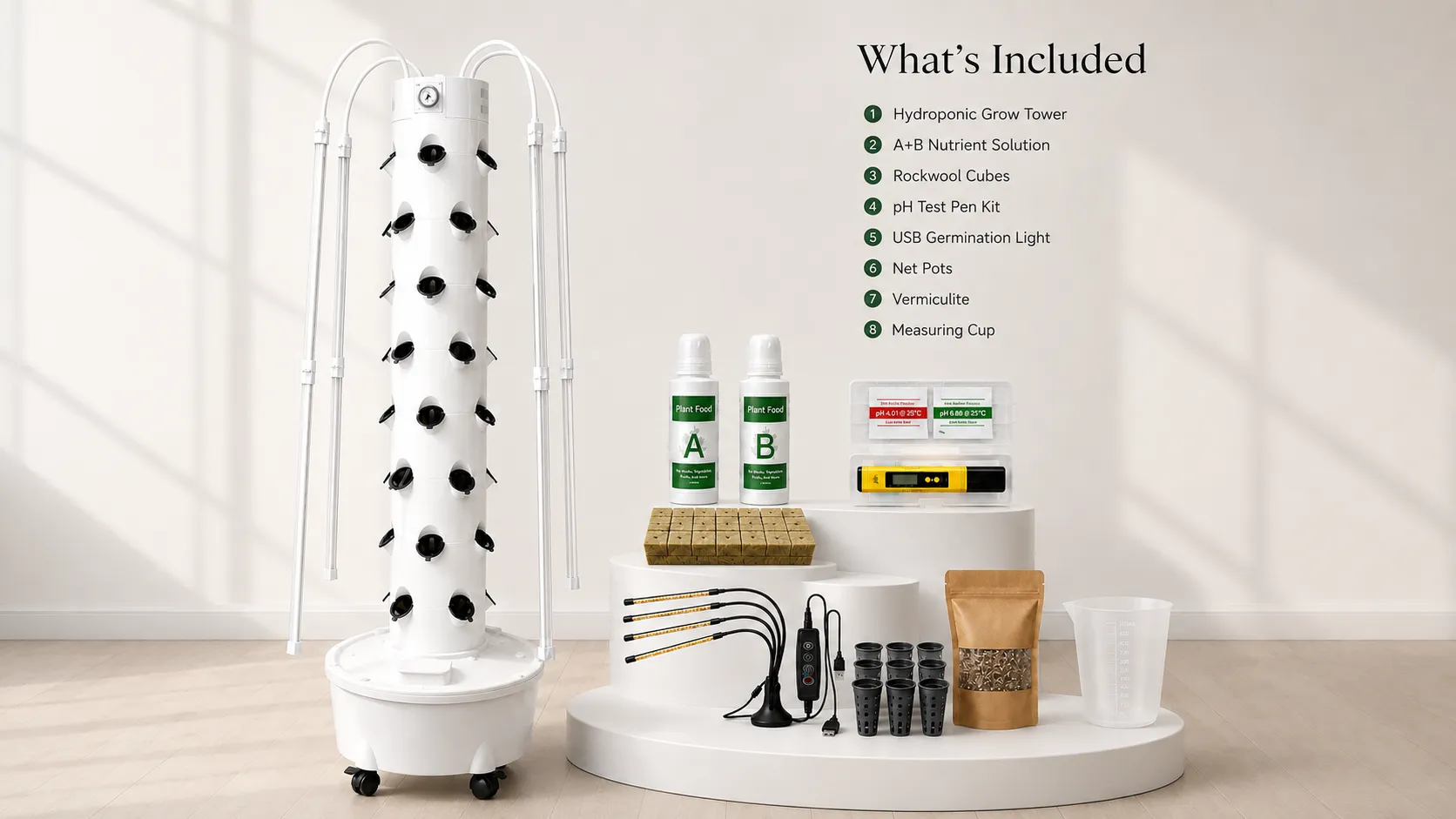
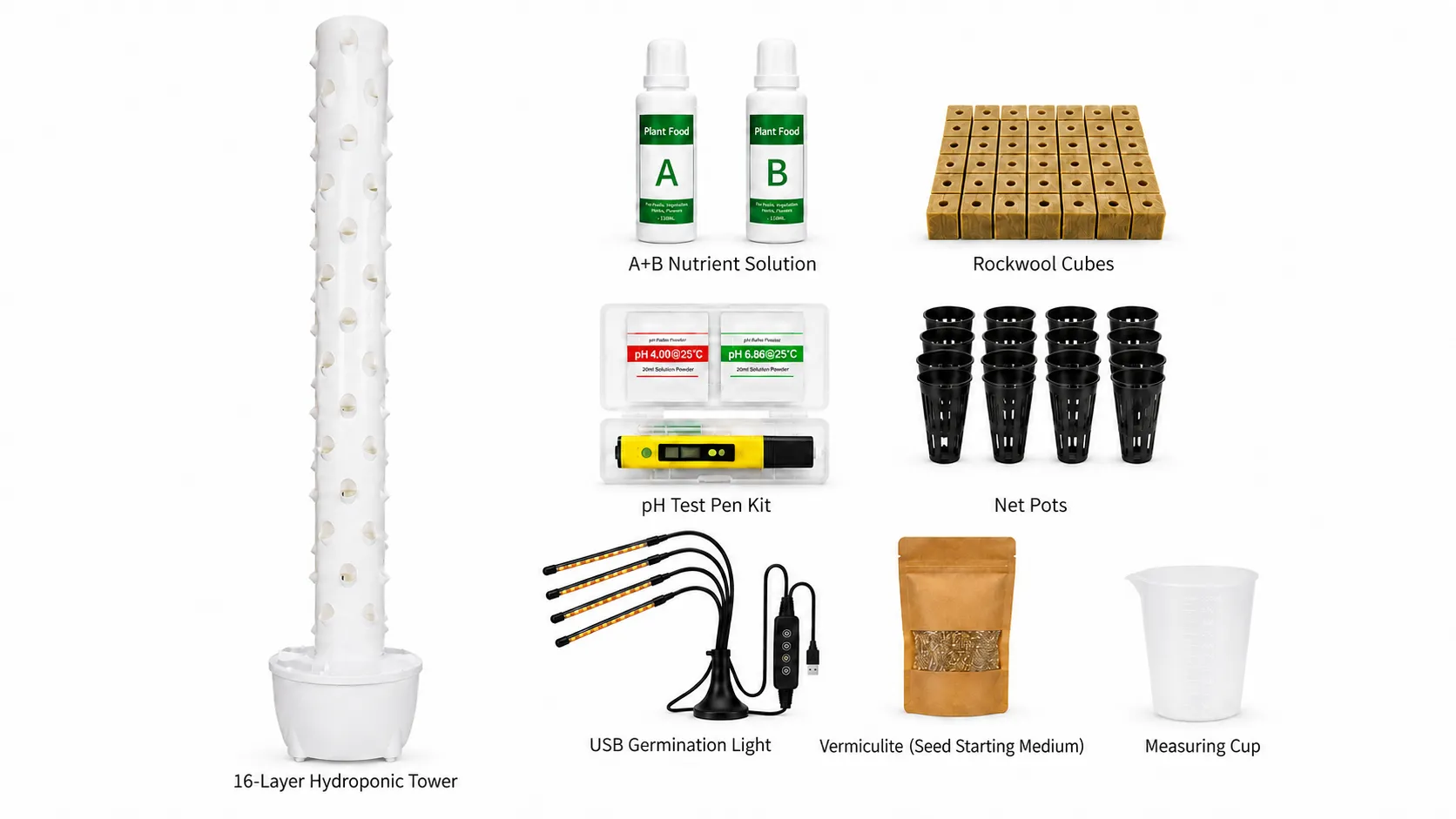
Two towers with the same price may include different equipment. Confirm whether the package includes the pump, timer, lights, power supply, baskets, seed-starting plugs, nutrients, test tools, instructions, and shipping.
Then estimate ongoing costs: light and pump electricity, nutrients, seeds, growing media, pH products, replacement pumps, light bars, tubing, and baskets. A lower purchase price is not a bargain if key parts must be added later.
7. Check Spare Parts, Warranty, and Support
Pumps, tubing, lights, baskets, seals, and connectors eventually need replacement. Ask which parts are sold separately, whether standard sizes are used, and how long the model will be supported.
Read the warranty for the tower body, pump, lights, and electrical parts separately. Also confirm exclusions, return shipping, and who handles problems in your country. Fast access to a spare pump may be more useful than a long warranty that is difficult to claim.
Hydroponic Tower Red Flags
- Planting-site count is shown, but dimensions and reservoir volume are missing.
- Grow-light wattage, coverage, timer, or replacement options are unclear.
- The pump cannot be accessed easily or replaced with a standard alternative.
- The reservoir and internal channels cannot be reached for cleaning.
- Water-contact materials are not identified.
- Spare pumps, lights, baskets, tubing, seals, or connectors are unavailable.
- Reviews repeatedly mention leaks, uneven watering, noise, or poor support.
Questions to Ask the Seller Before Ordering
- What are the complete dimensions with the light frame installed?
- What crops and mature plant sizes are the planting sites designed for?
- What is the reservoir volume, and how is it drained and cleaned?
- What are the pump flow rate, maximum lift height, and replacement model?
- What is the total light wattage, and can individual light bars be replaced?
- Which materials contact the water and roots?
- Exactly which accessories are included in the quoted price?
- Which spare parts are available, and what does the warranty cover?
Frequently Asked Questions
What is the best hydroponic tower for beginners?
Choose a moderate-size tower that is easy to assemble, clean, and repair. Clear instructions and available spare parts matter more than the highest planting-site count.
Are hydroponic towers worth it?
They can be worth it if you value fresh herbs and greens, have limited space, and will maintain the system regularly. They are not maintenance-free or guaranteed to save money.
Do hydroponic towers need grow lights?
Most indoor towers need grow lights unless they receive strong, reliable natural light. Greenhouse and outdoor towers may not need integrated lighting.
How noisy is a hydroponic tower?
Expect some pump hum and water sound. Noise depends on pump quality, vibration, water level, and return-flow design. Ask for a realistic sound demonstration.
How often should I clean a hydroponic tower?
Remove debris during use, inspect roots and the pump regularly, and clean thoroughly between crop cycles. Clean sooner if you see algae, slime, blocked flow, or unhealthy roots.
What happens if the pump stops?
Roots can dry quickly in warm conditions. Keep the pump accessible and consider a spare pump or backup plan for valuable crops.
Final Recommendation
Choose the smallest tower that comfortably meets your crop and harvest goals, then prioritize reliable lighting, accessible water components, easy cleaning, documented materials, and available spare parts.
A tower that fits your routine will produce more useful harvests than a larger system that is difficult to maintain.

0 Comments