
Hydroponic Tower Root Management: How to Prevent Clogs and Keep Water Flowing
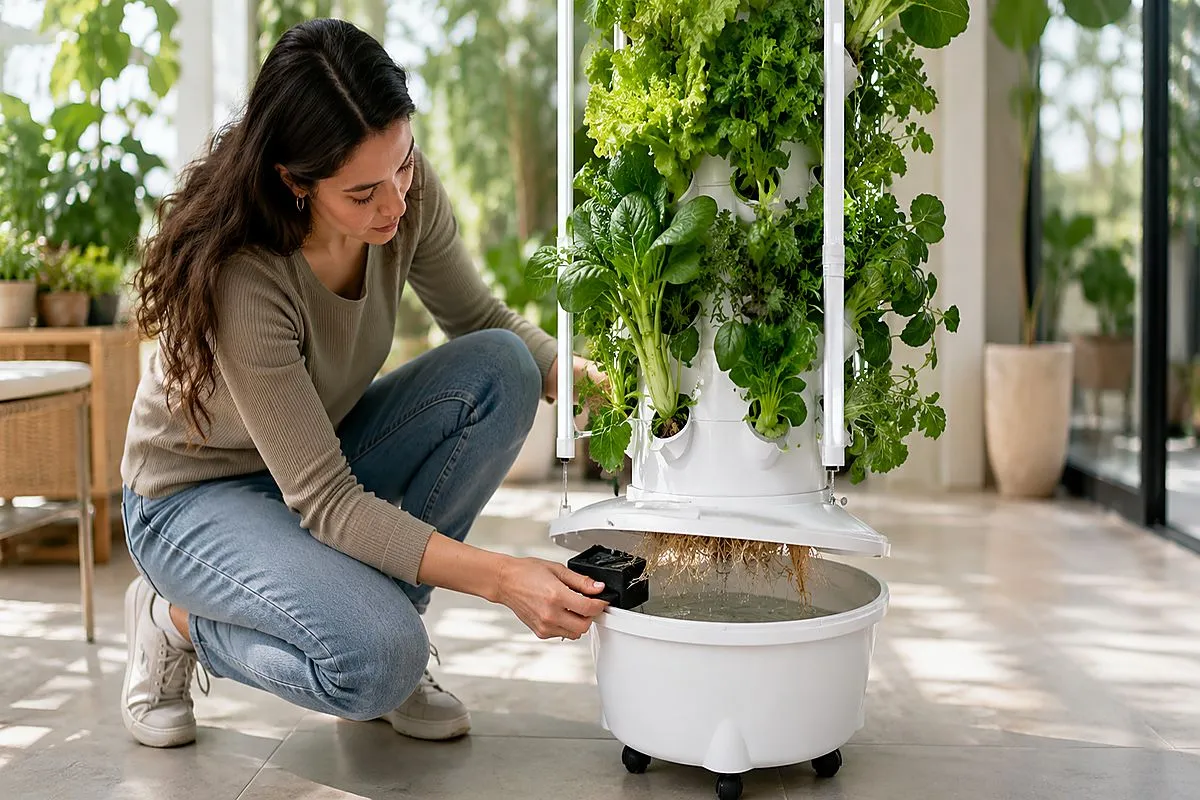
Healthy hydroponic plants can develop surprisingly large root systems. At first, this is exactly what growers want. White, vigorous roots usually mean the plant is actively absorbing water and nutrients.
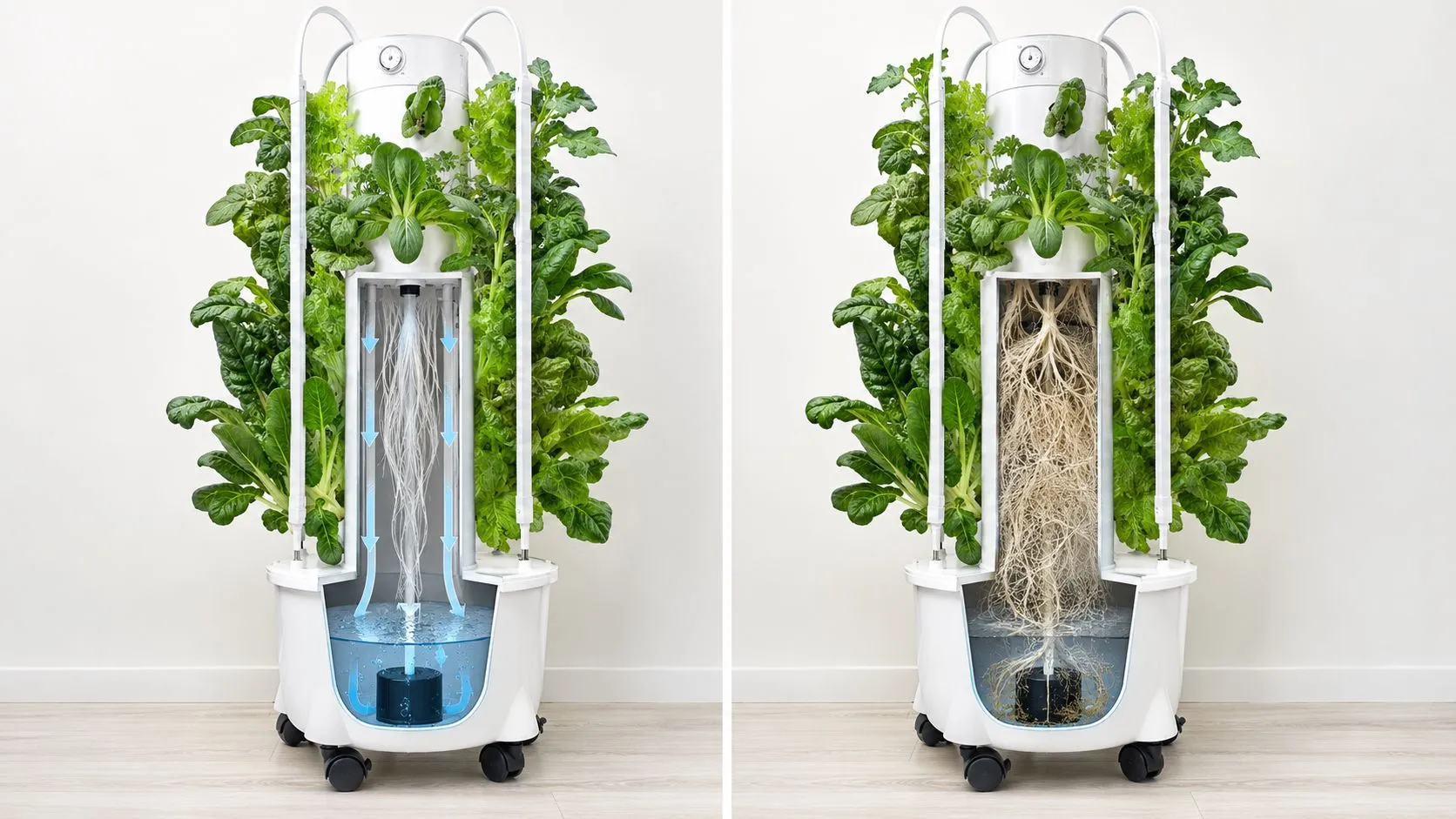
But after several weeks of growth, those roots may become long enough to spread through the inside of a hydroponic tower. Eventually, they can collect around drainage openings, interfere with water distribution, or reach the reservoir and pump. This is especially common when growing fast-growing leafy greens and herbs in a vertical hydroponic tower for an extended period.
The solution is not to prevent plants from developing strong roots. Instead, good hydroponic tower root management means keeping roots healthy while making sure water still has a clear path through the system.
Why Do Roots Grow So Large in Hydroponics?
Unlike soil-grown plants, hydroponic roots do not need to search through soil for moisture and nutrients. They grow directly in a nutrient-rich environment where water, minerals, and oxygen are readily available. Under good conditions, roots can grow quickly.
Some crops are particularly aggressive:
- Basil
- Mint
- Kale
- Swiss chard
- Bok choy
- Mature lettuce
- Tomatoes
- Cucumbers
Young lettuce may initially have a relatively small root system, but mature plants can develop long masses of roots that extend far inside the tower. This becomes more important when several mature plants are growing at the same time.
When Do Hydroponic Roots Become a Problem?
Long roots are not automatically a problem. The real question is: Are the roots interfering with the operation of the system? Here are the key warning signs:
1. Water Flow Becomes Uneven
Some planting levels receive plenty of water while others appear noticeably drier. This can happen when roots partially block an internal water path.
2. The Pump Sounds Different
A pump that suddenly becomes louder, vibrates more than usual, or seems to produce less water may have roots or plant debris around the intake.
3. Water Level Changes Unexpectedly
Water may begin collecting in part of the tower instead of returning efficiently to the reservoir.
4. Plants Wilt Even Though the Reservoir Is Full
A full water tank does not guarantee that every root zone is receiving water. Restricted circulation may prevent nutrient solution from reaching certain plants.
5. Roots Reach the Pump
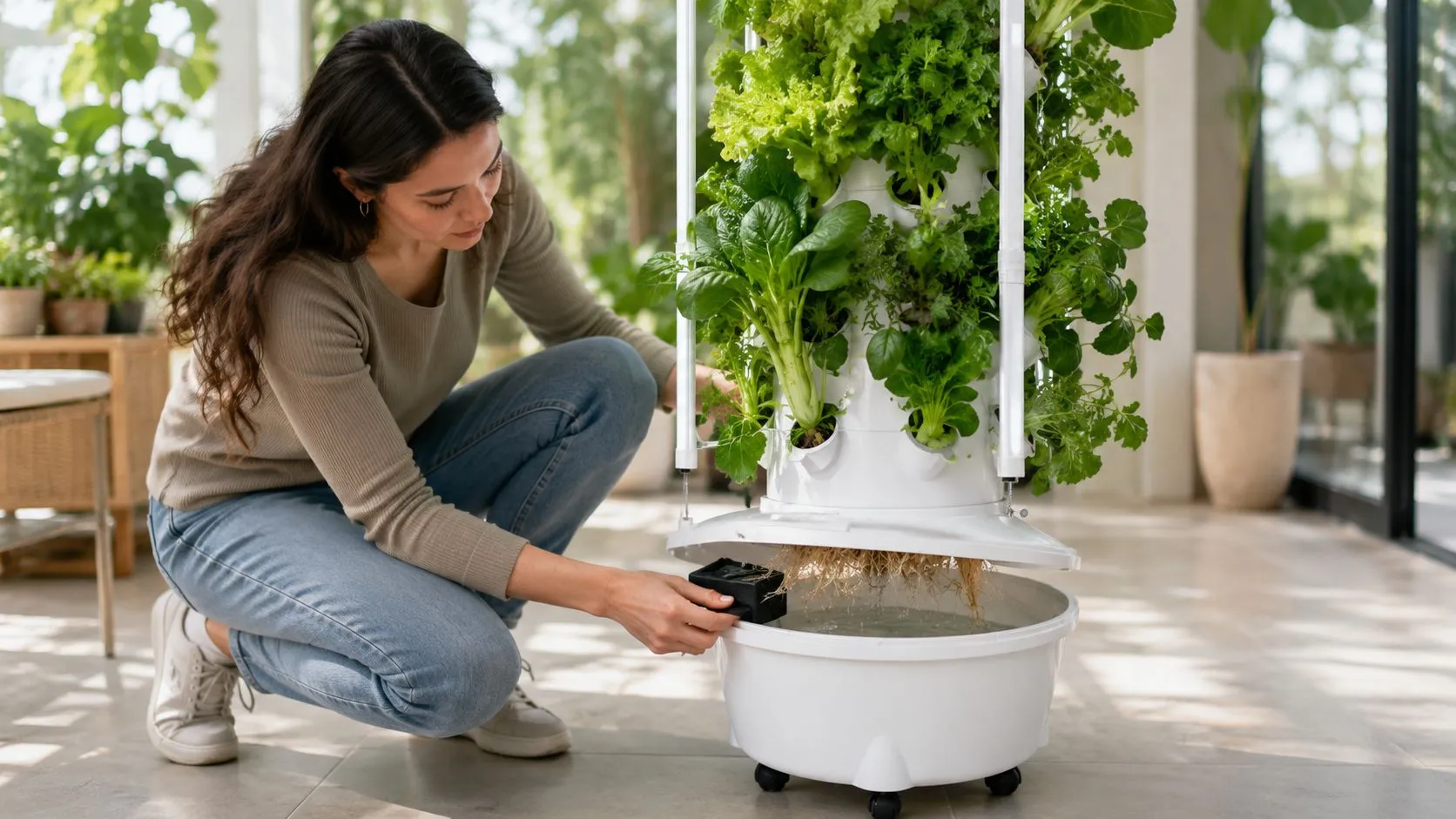
Long roots hanging directly into the reservoir can eventually move toward the pump intake. This is one of the clearest signs that root maintenance is needed.
How to Prevent Roots From Clogging a Hydroponic Tower
Prevention is much easier than trying to remove a large root blockage later. Follow these best practices:
1. Check the Root Zone Regularly
Do not wait until water stops flowing. Once plants become mature, inspect accessible roots during routine reservoir maintenance. For fast-growing crops, checking every one or two weeks can help you identify unusually large root systems before they become difficult to manage.
You do not need to measure every root. Look for large tangled root masses, roots entering drainage passages, roots reaching the pump, or dead/brown roots collecting inside the system.
2. Avoid Treating Every Planting Site the Same
A hydroponic tower may contain 40, 60, or even 80 planting sites, but that does not mean every site should always contain a large mature plant. Plant size matters. For example, growing several mature kale plants beside large basil plants will create significantly more foliage and root mass than growing compact lettuce and parsley.
A better planting strategy is to combine crops with different growth habits. For larger crops, leaving selected planting sites open can also make management easier. The goal is not simply to fill every hole. It is to use the available planting capacity intelligently.
3. Harvest Mature Plants on Time
One of the easiest ways to control excessive root growth is simply to harvest plants when they are ready. A lettuce plant that could have been harvested two weeks earlier may continue developing a larger root system without providing much additional value.
Succession planting works particularly well in hydroponic towers. Instead of planting everything at once:
- Start one group
- Add another group 1–2 weeks later
- Harvest mature plants gradually
- Replace harvested plants with younger seedlings
This creates a continuous harvest while preventing every plant in the tower from reaching maximum root size simultaneously.
Can You Trim Hydroponic Roots?
Yes, in some situations hydroponic roots can be trimmed. However, root pruning should be done carefully. The goal is not to dramatically reduce the entire root system. It is usually to remove excessive roots that are interfering with water circulation or entering areas where they should not be.
How to Trim Hydroponic Roots Safely
Use clean, sharp scissors. Before trimming:
- Wash your hands and disinfect the scissors.
- Identify only the excessively long or tangled roots.
- Avoid damaging the main root mass close to the plant.
- Remove a modest amount at one time.
After pruning, return the plant to the system and monitor it for several days. Avoid cutting a large percentage of the root system at once, especially when the plant is already stressed by heat, nutrient problems, disease, or transplanting. Healthy white or cream-colored roots should generally be preserved whenever possible.
What About Brown Hydroponic Roots?
Brown roots do not always mean root rot. Hydroponic roots can become slightly stained by nutrient solutions, organic additives, mineral deposits, or certain plant nutrients. Healthy roots should still feel relatively firm.
| Symptom | Potential Cause | Recommended Action |
| Brown, but firm and intact | Nutrient staining or organic additives | Normal. Continue monitoring. |
| Slimy, extremely soft, bad-smelling | Root rot, high water temp, poor oxygen | Do not just trim. Fix oxygen/temp issues, clean reservoir, treat pathogens. |
| Dry, brittle roots | Lack of water, blocked internal flow | Check pump function and clear tower blockages immediately. |
Keep Roots Away From the Pump
The circulation pump is one of the most important parts of a hydroponic tower. Without reliable water movement, plants on multiple levels can quickly lose access to water and nutrients.
Whenever you inspect the reservoir, check the pump intake. Remove loose roots, fallen leaves, plant debris, growing-media particles, and mineral buildup. A pump should never need to fight through a thick layer of roots to move water. If your system uses a protective pump cover or filter, inspect and clean it regularly as well.
Root Management for Different Crops
Not every plant needs the same amount of attention. Mixing compact crops with several larger crops is often easier to manage than filling every site with large mature vegetables.
| Crop | Typical Root Growth | Root Management | Tower Spacing Strategy |
| Lettuce | Moderate | Check when plants mature | Standard close spacing |
| Basil | Moderate–High | Inspect regularly | Give extra canopy space |
| Mint | High | Control aggressively, harvest often | Isolate to prevent spreading |
| Bok Choy | Moderate | Usually easy to manage | Standard spacing |
| Kale & Swiss Chard | High when mature | Give additional space, avoid overcrowding | Leave adjacent slots open |
| Tomato & Cucumber | Very High | Needs more space, support, and selective planting | Bottom tiers only, heavy pruning |
A Simple Root Maintenance Routine
Hydroponic root management does not need to become another daily chore. A practical routine might look like this:
- Every Few Days: Check pump sound, check water circulation, check reservoir level.
- Every 1–2 Weeks: Inspect accessible roots, check the pump intake, check water return areas, inspect large mature plants.
- At Harvest: Remove the harvested plant, remove its remaining root system entirely, and clear loose leaves and debris. Leaving dead roots inside can restrict water flow and collect organic debris.
- Between Growing Cycles: Clean tower sections, clean the reservoir, pump, and water lines, and inspect internal circulation areas. A periodic deep clean is much easier than removing generations of old roots later.
FAQ: Hydroponic Tower Root Management
Should I cut long roots in my hydroponic tower?
You do not need to trim roots simply because they are long. Consider trimming only when roots begin interfering with water flow, reaching the pump, or forming excessive tangles. Remove only a limited amount at one time.
Can roots damage a hydroponic pump?
Roots can wrap around or partially block a pump intake, which may reduce water flow and place additional strain on the pump. Keep the intake area completely clear.
Should I remove roots after harvesting a plant?
Yes. Removing old roots helps maintain water flow and prevents decomposing plant material from accumulating inside the tower.
The goal is simple: Let the roots grow — but keep the water moving.
When both happen at the same time, plants receive the water, nutrients, and oxygen they need while your hydroponic tower continues operating efficiently throughout the entire growing cycle.

0 Comments