
How to Prevent Pests in a Hydroponic Tower Garden: A Practical Maintenance Guide
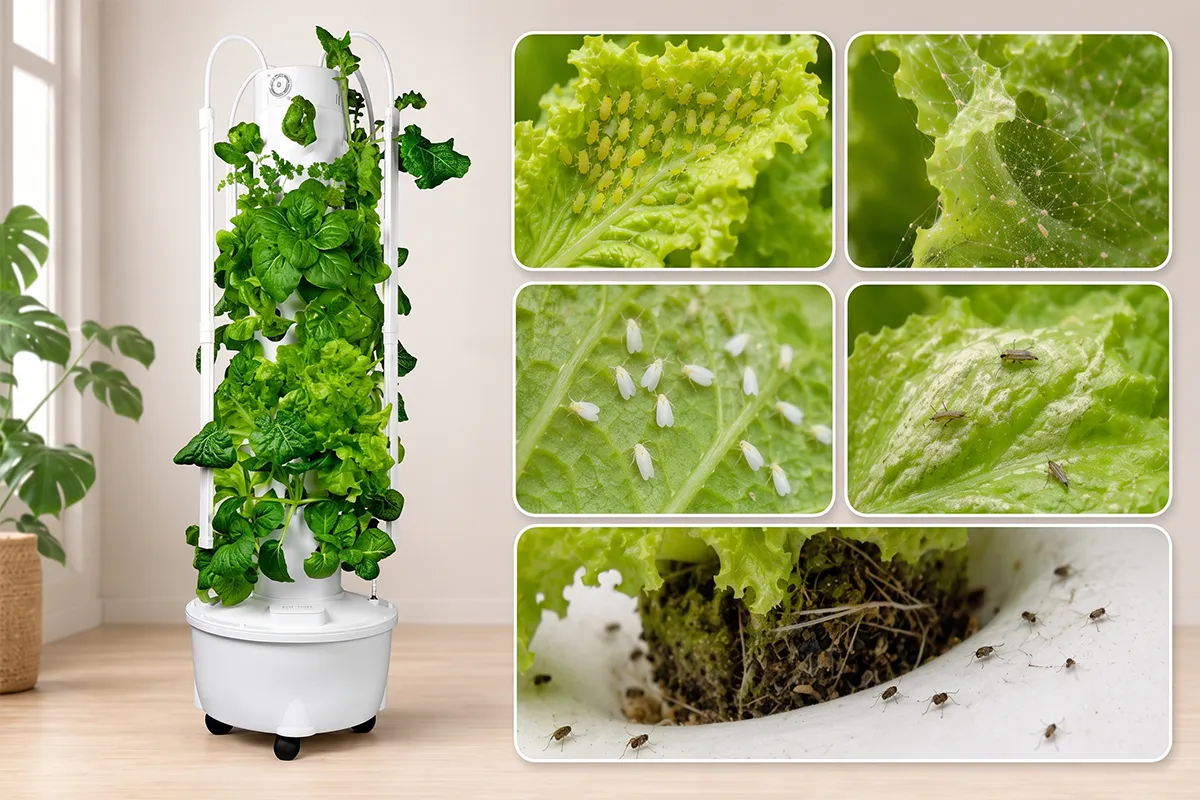
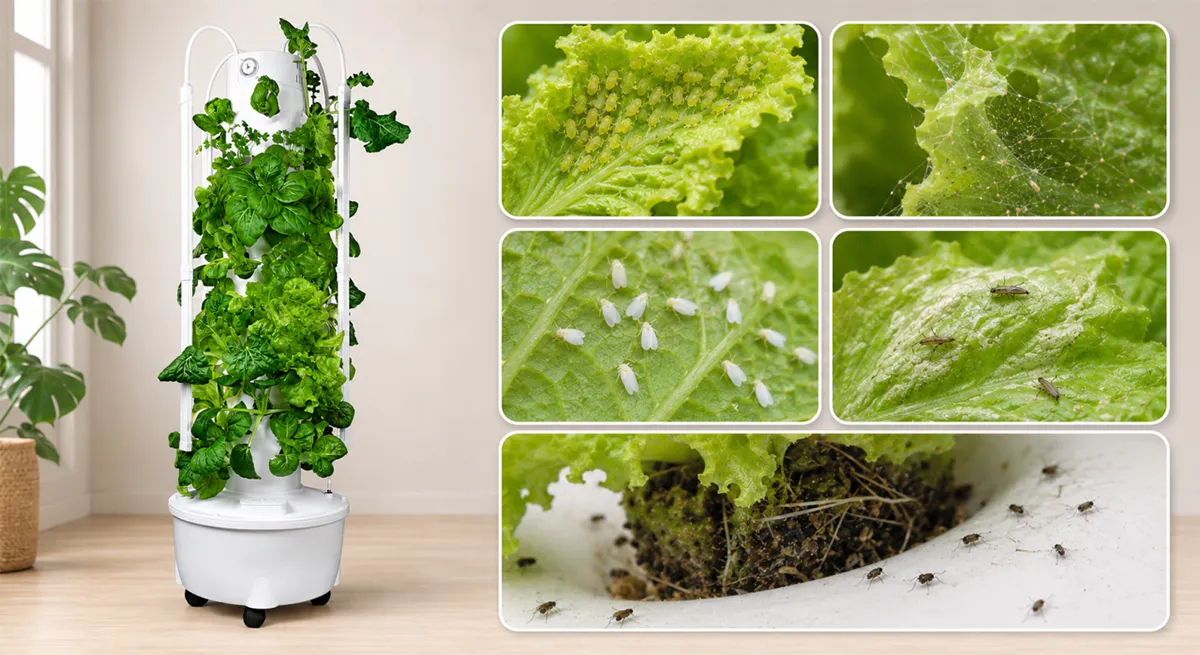
A hydroponic tower garden eliminates the need for traditional garden soil, which naturally reduces many soil-borne pests. However, it still requires regular, strategic maintenance to remain clean, healthy, and easy to manage. Small insects such as aphids, spider mites, and fungus gnats can easily arrive on new seedlings, drift in through open windows, migrate from nearby indoor houseplants, or spread from an outdoor growing area.
When dozens of plants are grown close together in a vertical system, a minor localized problem can quickly escalate before it becomes obvious to the grower. The most effective strategy is not to memorize the biological life cycle of every single pest species. Instead, the goal is to establish a proactive maintenance routine that makes it incredibly difficult for pests to establish a colony, while making any early warning signs impossible to miss.
This comprehensive guide focuses on practical pest prevention and system maintenance for a home hydroponic tower, with specific applications for the 40-site Yunzy V8. We will cover what to inspect, what to clean, how to avoid overcrowding, and exactly what to do when the first warning sign appears.
Why Routine Maintenance Matters More Than Emergency Treatment
When plants are checked only after severe leaf damage or webbing appears, treatment becomes exponentially more difficult. Dense, unmanaged foliage can easily hide leaf undersides, vulnerable young growth, constantly wet growing media, and the lower planting levels where small pest problems typically begin.
A consistent, weekly maintenance routine helps you:
- Find insects or unusual leaf damage before they spread to neighboring plants.
- Remove fallen leaves and decaying roots that act as breeding grounds for moisture-loving pests.
- Maintain critical airflow and light penetration around the mature plant canopy.
- Keep algae and wet organic debris under control.
- Protect the majority of healthy plants without resorting to unnecessary, messy blanket spraying.
- Reduce the heartbreaking need to discard an entire crop.
Note: The goal is to maintain a highly clean growing environment and take early action, not to create a completely sterile, hospital-grade system.
Common Warning Signs to Notice Early
You do not need to identify the exact insect species immediately to take action. First, notice the visual pattern of the damage and determine exactly where you need to inspect more closely.
Table 1: Visual Pest Warning Signs and Inspection Zones
| What You Notice (Visual Sign) | Where to Inspect Immediately | Possible Pest Suspect |
| Curled, distorted, or puckered new leaves | Growing tips, young stems, and the undersides of leaves. | Aphids |
| Fine webbing or tiny pale speckling on leaves | The underside of leaves and warm, dry, sheltered areas. | Spider Mites |
| Small insects fly up in a cloud when plants are moved | Lower leaf surfaces and nearby sticky monitoring cards. | Whiteflies |
| Silvery streaks, rough scars, or black specks | Young leaves, folded new growth, tight buds, and flowers. | Thrips |
| Small dark flies hovering near wet media | Growing sponges, algae buildup, roots, and moist organic debris. | Fungus Gnats |
| Sticky glossy leaves or black sooty residue | Leaf undersides and the areas directly below the affected foliage. | Aphids / Whiteflies (Honeydew) |
| One specific plant declines while others remain healthy | Its roots, growing sponge, water access, and nearby touching leaves. | Root rot / Localized infestation |
7 Steps for Hydroponic Pest Prevention
1. Inspect Seedlings Before They Enter the Tower
Introducing new, unverified seedlings is one of the easiest ways for pests to bypass your defenses and enter a hydroponic tower. Before transplanting, inspect every single seedling in excellent lighting.
- Check the top and underside of each leaf.
- Examine the growing tip and leaf joints (where pests love to hide).
- Inspect the stem and the growing sponge.
- Check the roots for severe discoloration or decay.
- Scan the overall seedling tray for algae buildup or small flying insects.
Keep suspicious seedlings separated in a quarantine area for several days instead of placing them immediately into a fully planted tower. Removing one affected seedling is infinitely easier than treating forty mature plants a week later.
2. Avoid Overcrowding the System
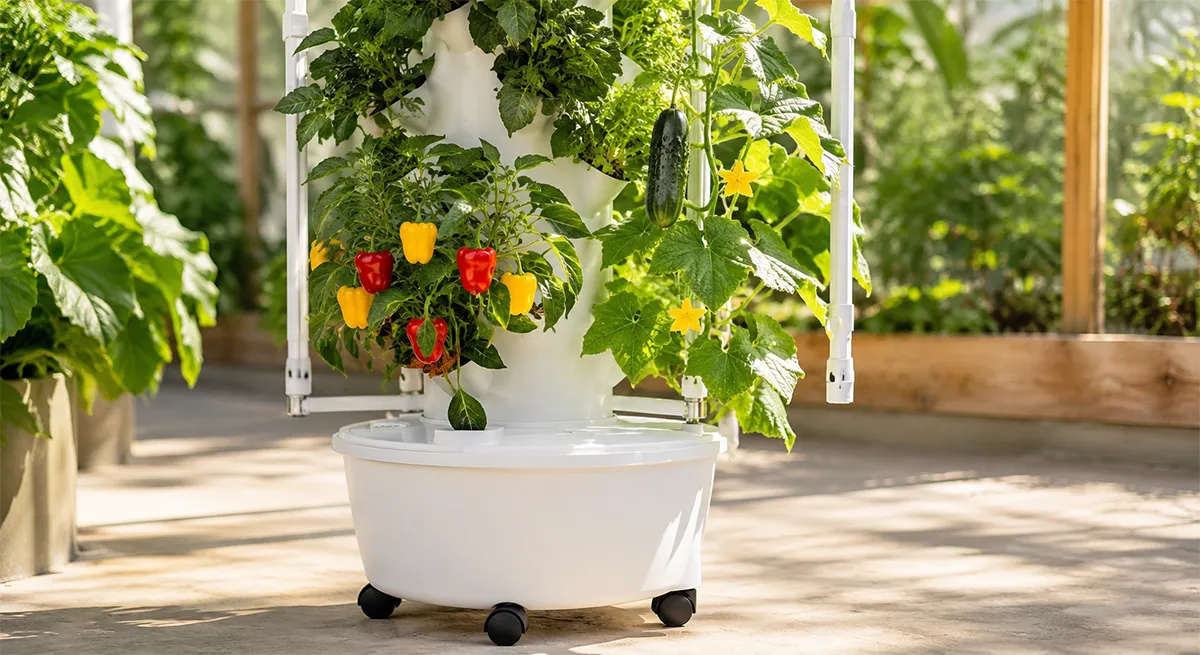
System planting capacity is not always the same as the ideal number of mature plants. The Yunzy V8 provides an impressive 40 planting sites, but large crops like mature kale, Swiss chard, bushy basil, cucumbers, and pepper plants require significantly more room than compact lettuce seedlings.
Overcrowding can:
- Hide leaf undersides and vulnerable young growth from your view.
- Drastically reduce airflow around wet foliage, inviting fungal issues.
- Block vital light from reaching lower-tier plants.
- Make harvesting and routine cleaning incredibly difficult.
- Allow one affected plant to physically touch several neighbors, acting as a bridge for pests.
Leave selected planting sites open when growing large crops. Always cover unused openings so light does not reach the wet internal surfaces, which would rapidly encourage algae growth.
3. Remove Plant Debris Promptly
Fallen leaves, damaged roots, old shed flowers, and wet plant material should never be allowed to remain on or around the tower. They trap moisture, provide hiding spots for insects, and create a decaying breeding area right next to your clean reservoir or planting pockets.
During your normal harvesting routine, proactively remove:
- Yellowing, decaying, or badly damaged leaves.
- Leaves that have fallen onto the reservoir lid.
- Dead, detached roots floating near the pump or water outlet.
- Plant material trapped between the vertical tower sections.
- Spilled growing media and algae around unused openings.
Tip: Always use clean, sanitized scissors for pruning, and clean them before moving from a potentially affected plant to a healthy one.
4. Keep the Reservoir and Wet Surfaces Clean
Moist growing media, unchecked algae, and decomposing roots can support populations of small flying insects (like fungus gnats) even when no soil is present in the system. The reservoir area must be part of your weekly inspection, not something you check only when the pump mysteriously stops working.
Regularly inspect:
- The reservoir lid and the water-level checking opening.
- The main pump intake and its protective filter cover.
- Internal hoses and the top water distributor.
- Unused planting pockets.
- Growing sponges that remain constantly saturated without plant uptake.
- The floor and drip tray directly beneath the tower.
5. Maintain Gentle Air Movement
Stagnant, still air combined with dense foliage makes the tower harder to inspect and allows condensation and transpiration moisture to remain trapped on the leaves—a perfect recipe for fungal issues and pest comfort.
Gentle air movement helps keep the plant canopy open, strengthens stems, and makes unusual leaf damage much easier to spot. If the room is naturally still, position a small oscillating circulating fan nearby. It should create a gentle breeze causing the leaves to flutter slightly, rather than a harsh wind blasting constantly on one side of the tower.
6. Use Monitoring Cards as an Early-Warning Tool
Yellow or blue sticky monitoring cards are invaluable for revealing the presence of small flying insects (like whiteflies, fungus gnats, or thrips) long before large numbers become visible around the plants.
Note: They are useful for monitoring and population suppression, but they are not a complete treatment on their own.
- Place cards near the dense foliage without letting them stick to edible leaves.
- Keep them safely away from LED light bars, fans, and moving parts.
- Check the cards on the exact same day each week to track trends.
- Replace cards immediately when they become dusty, wet, or crowded with insects.
- Record whether insect numbers are rising or falling week over week.
7. Follow the Same Systematic Inspection Route Every Week
Using a fixed inspection order ensures that no part of the tower is ever overlooked. For a multi-level system like the Yunzy V8, moving systematically from the top level down to the base is the most efficient method.
1.Inspect tender new growth near the top housing.
2.Turn over leaves on the upper planting levels to check the undersides.
3.Check the middle levels where the foliage canopy is often the densest.
4.Inspect shaded leaves and wet growing sponges on the lowest levels.
5.Look at unused openings and wipe away any algae or debris.
6.Check the reservoir lid, water-level opening, pump area, and the surrounding floor.
7.Review the sticky monitoring cards and record anything unusual.
A regular, predictable route is significantly faster than random, scattered inspection and makes it far easier to compare visual changes from one week to the next.
Standardizing Your Maintenance Routine
Table 2: The 10-Minute Weekly Maintenance Check
| Step | Routine Maintenance Task |
| 1 | Scan globally for curled, spotted, silvered, sticky, or unusually pale leaves. |
| 2 | Physically turn over leaves to inspect the undersides and new growth. |
| 3 | Remove any fallen, decaying, or badly damaged leaves from the plants and the base. |
| 4 | Evaluate plant spacing; prune large leaves that are blocking airflow or choking smaller plants. |
| 5 | Inspect growing sponges and unused covered openings for any algae buildup. |
| 6 | Check the reservoir lid, pump intake, hoses, and verify that water is flowing from the top. |
| 7 | Inspect visible roots for slimy brown decay or trapped organic debris. |
| 8 | Review sticky monitoring cards and count caught pests. |
| 9 | Wipe up nutrient spills and sweep/clean the floor area directly around the tower. |
| 10 | Record the location and severity of any unusual plant or insect activity in a log. |
Table 3: Recommended Maintenance Frequency
| Frequency | Recommended Maintenance Action |
| Daily or every few days | Observe overall plant condition, listen to confirm water flow, and remove obvious fallen leaves on the lid. |
| Weekly | Perform the full 10-minute check: inspect leaf undersides, sponges, roots, cards, pump, and hoses. |
| After adding seedlings | Increase visual inspections for the next one to two weeks to catch any hitchhikers early. |
| After finding a problem | Inspect the affected plant and all immediate neighbors every few days until no new signs appear. |
| Between crop cycles | Thoroughly scrub, sanitize, and rinse net pots, tower sections, reservoir, pump cover, and tools. |
What to Do When You Find a Problem
When a suspicious leaf or insect is found, avoid the urge to panic and treat the entire tower immediately. Start with a measured, controlled response:
1.Isolate: Confirm which specific plant and planting level are affected.
2.Expand search: Inspect the neighboring plants and the underside of nearby leaves.
3.Remove: Snip off heavily damaged leaves or entirely isolate/remove the affected plant when practical.
4.Clean: Wipe away fallen debris, sticky honeydew residue, algae, or decaying roots from the area.
5.Physical intervention: Use physical removal (like dabbing pests with tape) or gentle water rinsing when appropriate.
6.Monitor: Check the exact same area again after several days to evaluate if the issue is spreading.
7.Treat: Use an insecticidal soap or neem oil product specifically labeled for edible crops only when simpler measures fail.
Important: When using any treatment spray, cover and protect the nutrient reservoir, pump intake, LED grow lights, and electrical components. Always adhere to the product label for crop restrictions and harvest intervals.
What NOT to Do
- Do not indiscriminately spray the whole tower before identifying where the problem originated.
- Do not use a pesticide on edible crops unless the label explicitly permits that specific crop and indoor/hydroponic use site.
- Do not let treatment liquids drip down into the nutrient reservoir or electrical components.
- Do not leave severely affected, dying plants touching perfectly healthy neighboring plants.
- Do not rely solely on sticky cards while ignoring physical inspections of leaves and roots.
Specific Maintenance Notes for the Yunzy V8
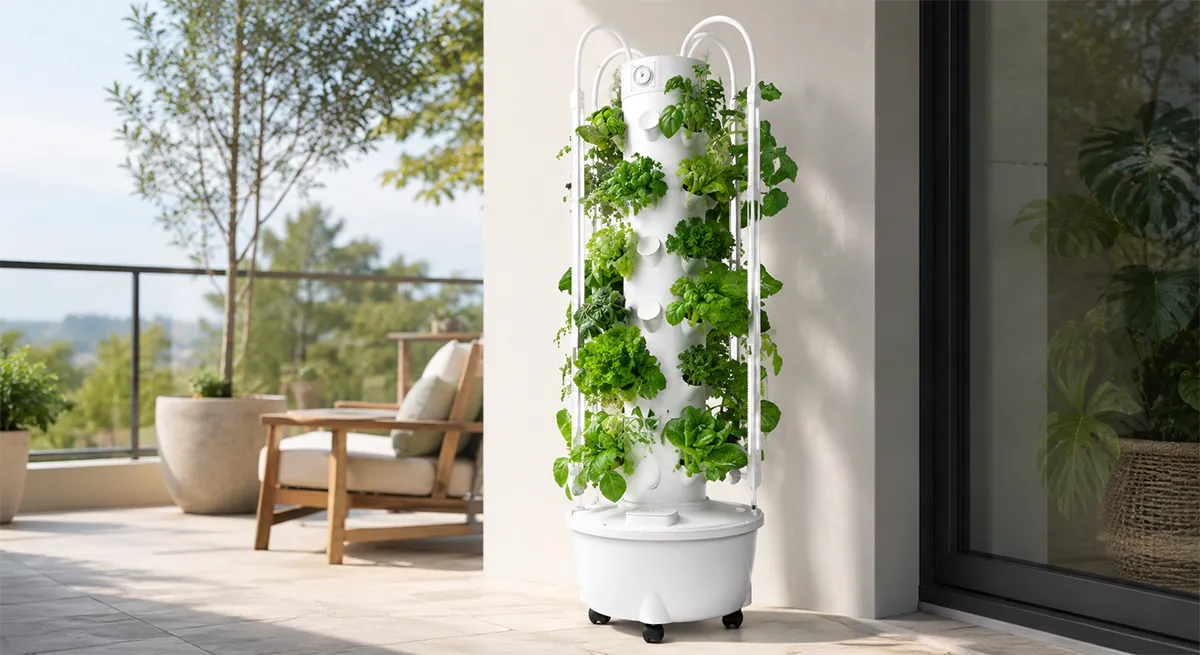
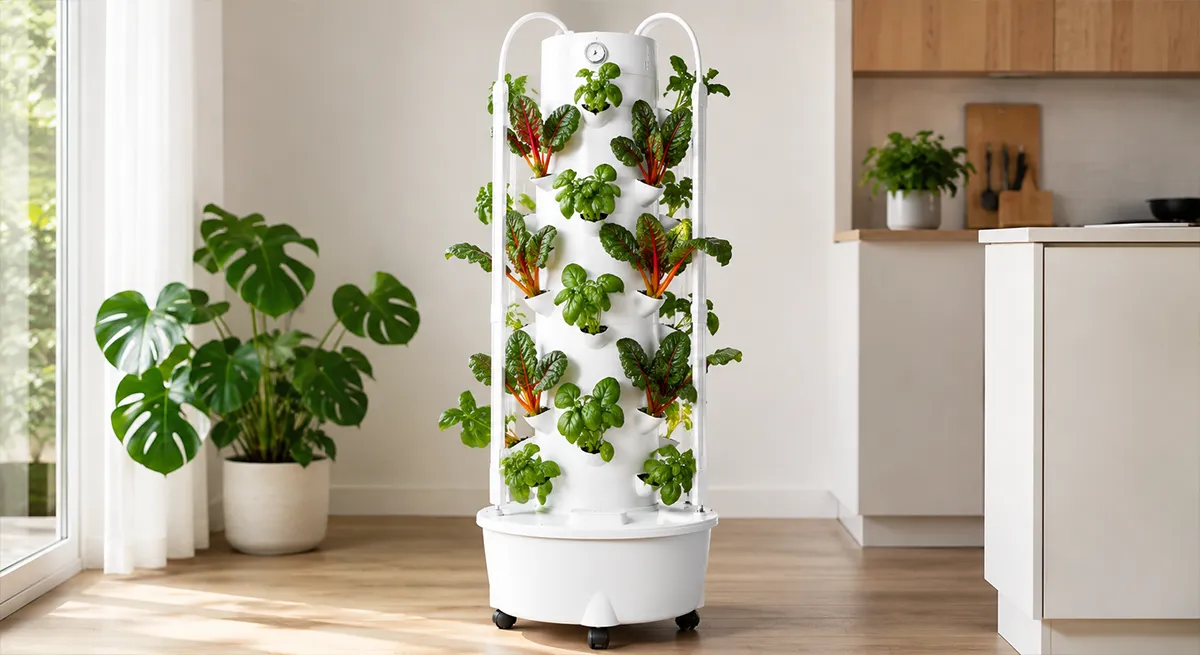
The Yunzy V8 features eight stacked planting levels and 40 planting sites. Its vertical design makes incredibly efficient use of space, but that same overlapping structure demands a deliberate inspection routine.
- Utilize the casters: Use the built-in caster wheels to gently rotate or reposition the tower so you can easily inspect the back side (do this carefully when the 12-gallon reservoir is not filled to the absolute brim).
- Keep arms clear: Keep the curved structural support arms and LED light bars free from overgrown leaves so all sides of the tower remain clearly visible.
- Prune proactively: Prune large crops (like chard or kale) before their massive leaves completely cover neighboring planting pockets below them.
- Check the top: Always check the highest levels first, because they are the easiest to overlook when standing directly below.
Frequently Asked Questions (FAQ)
Can a hydroponic tower get pests without soil?
Yes. While soil-borne pests are eliminated, many insects (aphids, thrips, spider mites) live on the leaves, stems, roots, or moist growing media. They can easily arrive on new seedlings, nearby houseplants, gardening tools, clothing, or drift in through open windows.
How often should I inspect the Yunzy V8?
A quick 10-minute weekly inspection is highly effective under normal conditions. You must inspect more frequently immediately after adding new seedlings, moving the tower outdoors, or noticing the first unusual leaf marking.
Should every single damaged leaf be removed?
Remove badly damaged, decaying, heavily infested, or yellowing leaves. However, a single minor cosmetic scratch or mark does not always require amputating the leaf or discarding the entire plant.
Why do pest problems sometimes return right after cleaning?
Microscopic eggs or immature insects may have survived in crevices, nearby houseplants may still be harboring the colony, or poor conditions (like wet debris and overcrowded foliage) may still be supporting their lifecycle. Repeated, diligent inspection is crucial.
Final Thoughts
Pest prevention in a hydroponic tower is fundamentally a routine maintenance task, not a daily battle. Starting with healthy, inspected seedlings, ensuring sensible plant spacing, wiping down wet surfaces, promptly removing decaying plant debris, and executing a predictable weekly inspection route are exponentially more valuable than waiting for a serious infestation to take hold and then attempting to chemically treat every plant.
For users of the Yunzy V8, moving systematically through all eight planting levels makes this maintenance incredibly fast and highly reliable. When something unusual does appear, act early, isolate the issue to protect the healthy plants, and make one controlled change at a time. A well-maintained, clean tower is infinitely easier to harvest, easier to clean, and far less likely to ever require broad-spectrum pest treatments. Contact Yunzy to learn more about planting techniques.

0 Comments