
How Much Electricity Does a Hydroponic Garden Tower Use?
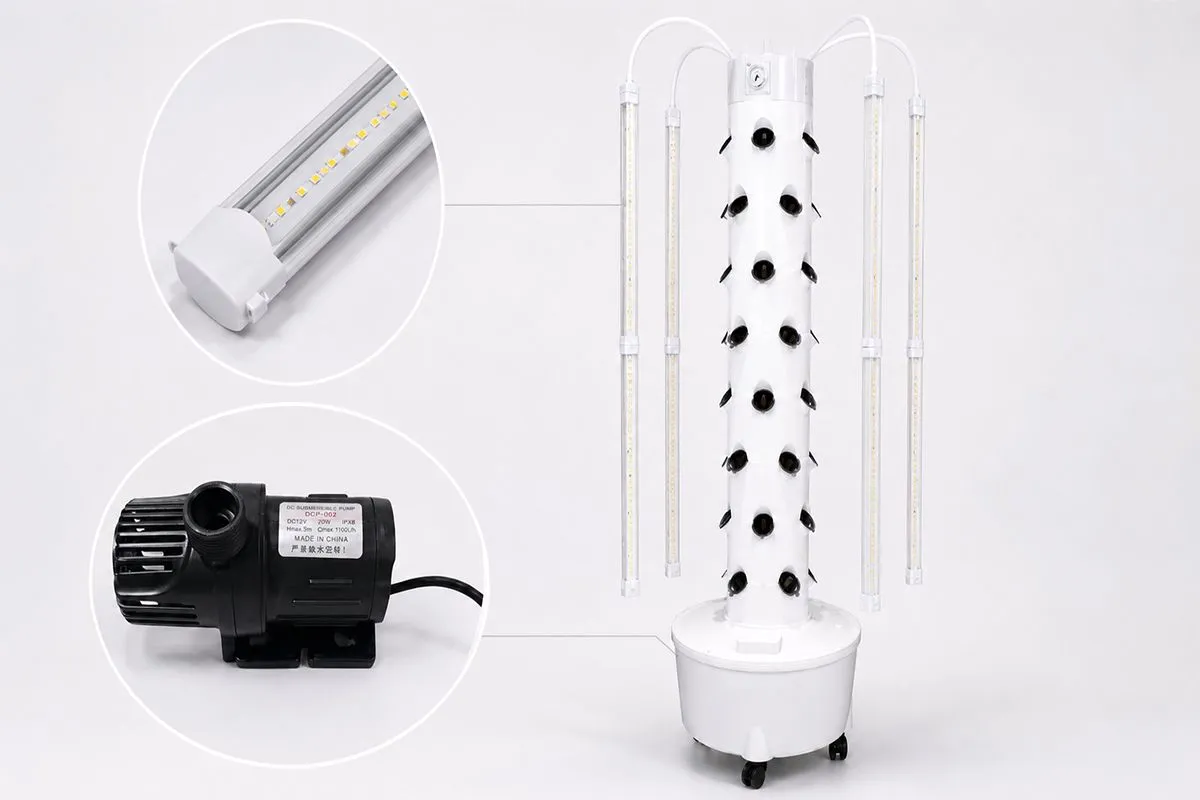
A hydroponic garden tower is a revolutionary way to grow lettuce, herbs, and leafy greens vertically without taking up much valuable floor space. However, for many prospective indoor growers, one of the most critical questions before making a purchase is understanding the ongoing operational costs—specifically, how much electricity the system will consume each month.
The good news is that modern vertical farming systems are highly energy-efficient. Electricity consumption primarily stems from two main components: the LED grow lights and the water circulation pump. The final monthly cost ultimately depends on their wattage, your daily operating schedule, and your local utility electricity rate.
Electricity Use of the Yunzy V8 Hydroponic Garden Tower
To provide a clear, real-world example, let’s look at the power requirements of the Yunzy V8 Hydroponic Garden Tower. This premium system is equipped with eight highly efficient LED grow light bars and a single water circulation pump.
1. LED Grow Lights (The Primary Consumer)
In almost all indoor hydroponic setups, grow lights represent the largest source of electricity consumption. The Yunzy V8 utilizes eight LED light bars, each rated at 15 watts. Therefore, when the entire lighting system is operating simultaneously, it uses a total of 120 watts (8 light bars × 15 watts).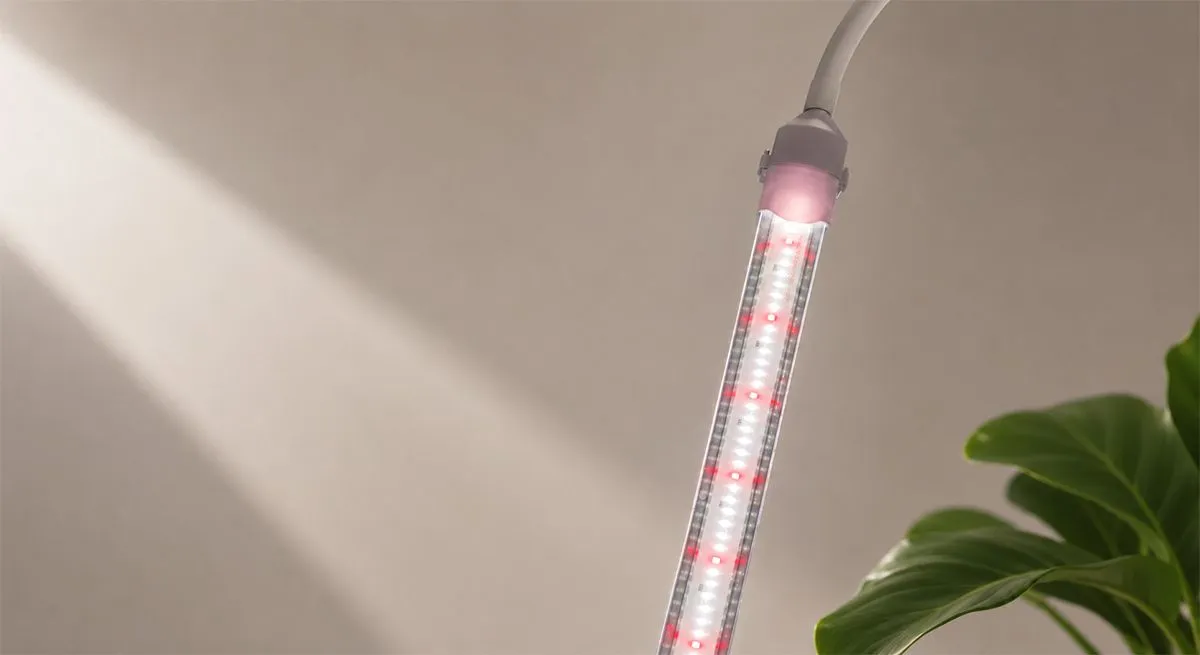
The daily operating duration for these lights will vary based on the specific crop type, the plant’s current growth stage, ambient room conditions, and the availability of supplemental natural light.
2. The Water Circulation Pump
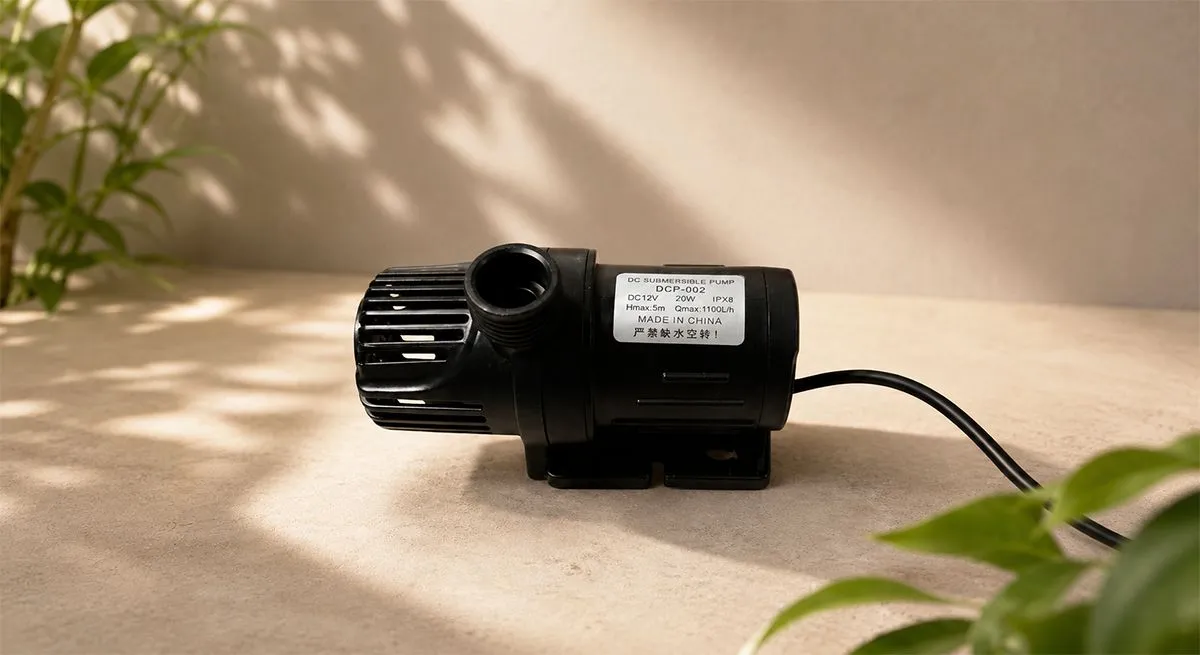
The Yunzy V8 utilizes an energy-saving 20-watt water pump. This essential component is responsible for circulating the nutrient-rich solution from the base reservoir up to the top distributor of the tower.
Gravity then allows the solution to flow down through the individual planting levels, nourishing the roots before returning to the reservoir. Its actual electricity footprint depends heavily on whether you choose to run it continuously or utilize a timer schedule to cycle the water periodically.
How to Calculate Your Monthly Electricity Cost
Estimating your monthly utility expense is straightforward. You can use the following standard formula to determine electricity consumption in kilowatt-hours (kWh):
(Wattage ÷ 1,000) × Operating Hours Per Day × 30 Days = Monthly kWh
To find your estimated cost, simply multiply that result by your local utility rate:
Monthly kWh × Local Electricity Price per kWh = Estimated Monthly Cost
Estimated Grow Light & Water Pump Costs (Practical Examples)
To illustrate this, the following estimates are calculated using an average sample electricity rate of $0.18 per kWh. (Please note: This is only an example. Check your local utility bill, as your actual rate may be higher or lower.)
| System Component | Power Rating | Daily Operating Time | Monthly Electricity Use | Estimated Monthly Cost (@ $0.18/kWh) |
| LED Grow Lights | 120W | 12 hours | 43.2 kWh | $7.78 |
| LED Grow Lights | 120W | 14 hours | 50.4 kWh | $9.07 |
| Water Pump | 20W | 6 hours | 3.6 kWh | $0.65 |
| Water Pump | 20W | 24 hours (Continuous) | 14.4 kWh | $2.59 |
As the data demonstrates, the LED grow lights are the primary driver of electricity consumption. The 20-watt water pump uses considerably less power, especially when operated on a smart timer rather than running 24/7.
Estimated Total Monthly Cost
For a typical indoor grower running the lights for 12 hours a day and the pump for a combined 6 hours a day on a timer:
- Grow Lights: ~$7.78/month
- Water Pump: ~$0.65/month
- Total Estimated Electricity Cost: ~$8.43 per month
If you extend the lighting schedule to 14 hours per day to support blooming or fruit-bearing crops under the same pump schedule, the estimated total rises slightly to approximately $9.72 per month. These figures represent highly affordable operational costs compared to the yield of fresh, pesticide-free produce you receive in return.
Do You Always Need Grow Lights?
Whether a hydroponic garden tower strictly requires LED lighting depends entirely on its installation location. Indoor rooms generally lack sufficient, consistent sunlight—especially during winter months or in corners far from south-facing windows. In these environments, grow lights are essential; they provide a perfectly controlled spectrum and allow you the flexibility to place the tower anywhere in your home.
However, if you are placing your tower in a greenhouse, on a sun-drenched patio, or in a bright outdoor garden, you may receive ample natural sunlight to grow without artificial lights. Relying on the sun eliminates lighting electricity costs entirely, though your harvest will be more susceptible to local weather patterns, seasonal daylight changes, and passing shade.
The Yunzy V8 is available in configurations both with and without LED grow lights, giving you the freedom to choose the perfect setup for your specific environment.
How to Keep Electricity Use Under Control
Optimizing your system can further reduce your monthly energy footprint:
1. Set a Suitable Lighting Schedule
Plants require a dark period to rest and respire; grow lights do not need to remain on for 24 hours a day. Utilizing a timer ensures a consistent daily schedule (typically 12 to 16 hours, depending on the crop) while preventing unnecessary electricity waste. Adjust this timing based on how much natural ambient light the room receives.
2. Adjust the Pump Schedule
When appropriate for your crop and environment, a timer can also control the pump’s operating cycles (e.g., 15 minutes on, 45 minutes off). This schedule should be tailored to plant size, root mass, ambient temperature, and the water-retention capacity of your growing medium. The primary rule is simple: the root zone must never be allowed to dry out completely.
3. Keep the System Clean
Over time, aggressive root growth, mineral salt deposits, and plant debris can restrict internal water flow. Regularly inspect the pump intake, hoses, water outlets, and the main reservoir. A clean, unobstructed circulation system maintains stable water pressure, meaning the pump doesn’t have to work as hard, which subtly improves longevity and efficiency.
Other Operating Costs to Consider
While electricity is a primary factor, maintaining a healthy hydroponic garden tower involves a few other minimal recurring costs:
- Water: As a recirculating system, the tower is incredibly water-efficient compared to soil gardening. You will only need to top up the reservoir to replace water absorbed by the plants or lost to natural evaporation.
- Hydroponic Nutrients: Soil-less plants rely entirely on a liquid nutrient solution. Usage scales with plant size and growth stage. Always follow the manufacturer’s mixing ratios to prevent root burn.
- Seeds & Growing Supplies: Expect occasional costs for fresh seeds, replacement growing sponges (usually replaced after each harvest cycle), pH testing liquids/meters, EC calibration fluids, and basic cleaning brushes. (Note: The plastic net pots are reusable).
Frequently Asked Questions (FAQ)
Does a hydroponic garden tower use a lot of electricity?
No, a home-scale tower is not a high-power appliance. For most indoor growers, it consumes roughly the same amount of power as leaving a few standard incandescent light bulbs on. As shown, it typically costs less than $10 a month.
Can a hydroponic garden tower be used without grow lights?
Absolutely. If you place the tower in a greenhouse, on a sunny patio, or in a bright garden space that receives 6-8+ hours of direct sunlight, you can forgo the LED lights entirely.
Does the water pump need to run continuously?
Not always. Depending on your specific setup, temperature, and growing medium, the pump can often be run in timed intervals (e.g., 15 minutes every hour) to save electricity without harming the plants.
Final Thoughts
Growing your own fresh food vertically is both rewarding and surprisingly economical. The Yunzy V8 system utilizes a maximum of 120 watts for its LED grow lights and just 20 watts for its water pump.
Assuming an average electricity rate of $0.18 per kWh, running a robust schedule (12–14 hours of light and a 6-hour cycled pump) will only cost approximately $8 to $10 per month. Actual costs will naturally fluctuate based on your local utility rates and personal timer settings.
Ultimately, indoor growers benefit from the precision and consistency of LED lighting, while those with ample outdoor sunlight can opt for a light-free setup to eliminate electricity costs almost entirely. Either way, the minimal cost of electricity is easily offset by the abundance of fresh, hyper-local produce you can harvest right from your living room or patio. Click here to browse more guides.

0 Comments